Nonprofit works to install green stormwater solutions in Valley
Published 1:30 am Thursday, May 7, 2026
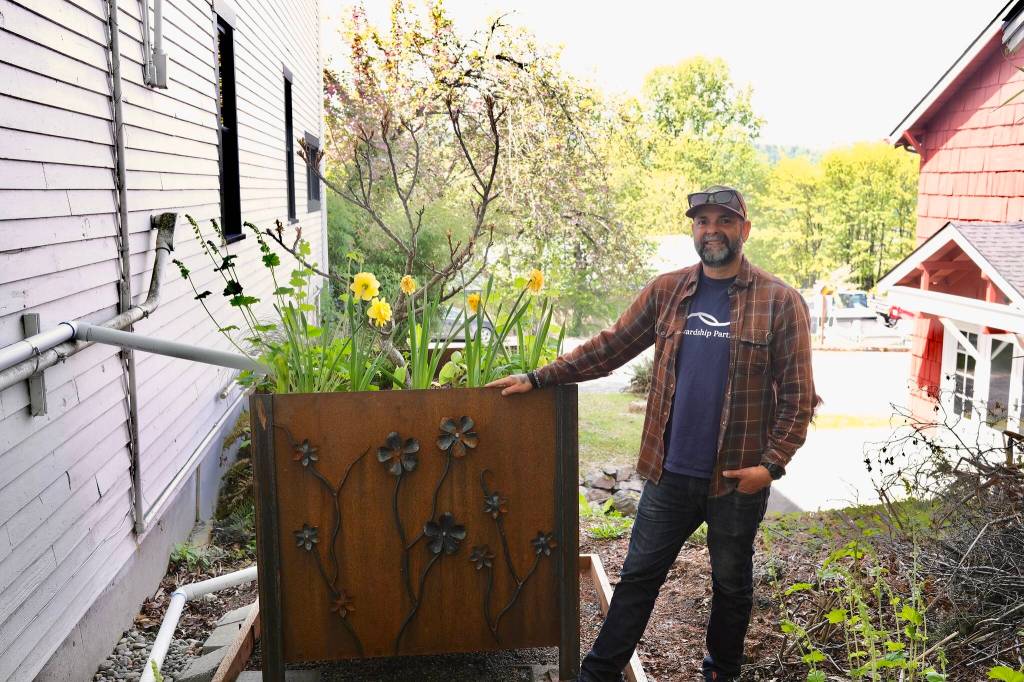
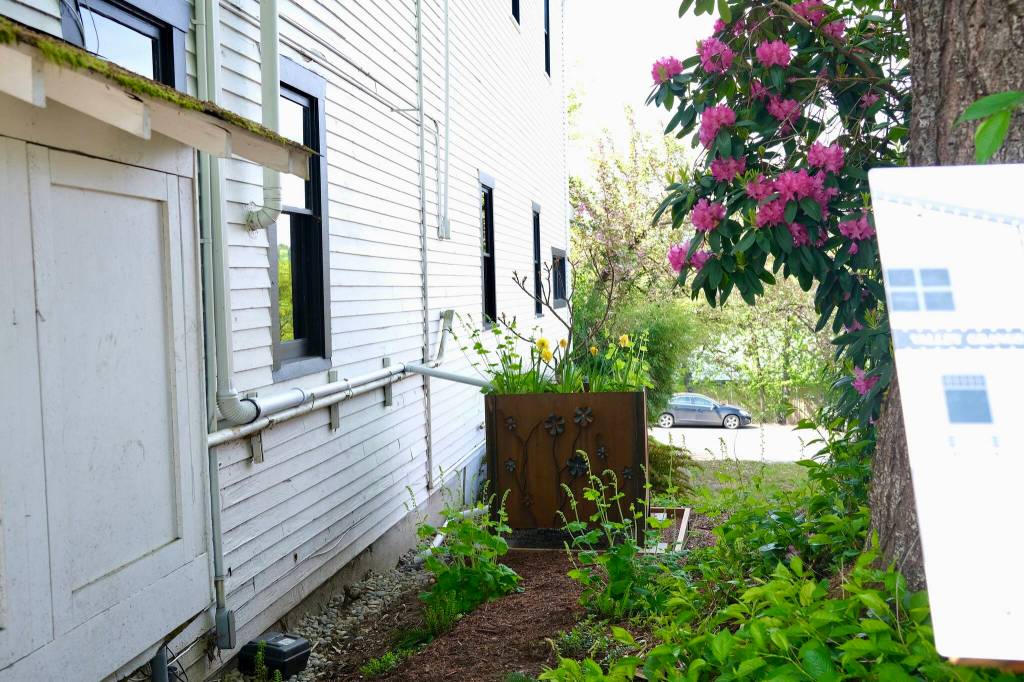
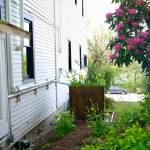

Beautifully crafted and wonderfully functional, a new installment in downtown Duvall will help filter stormwater before it reaches the Snoqualmie River.
Local nonprofit Stewardship Partners recently installed a biofiltration box outside of The Grange restaurant. Externally, the box is an artful planter, topped with native blooms. Internally resides a system designed to filter pollutants through soil before ejecting clean water into the world.
“The simple way to describe it is kind of the way that we describe rain gardens: they act as a sponge,” said Chris LaPointe, Stewardship Partners’ director of ecological restoration. “They absorb pollutants, they absorb toxins in them. … It takes the water, filters it out and puts cleaner water back into the Snoqualmie River, eventually.”
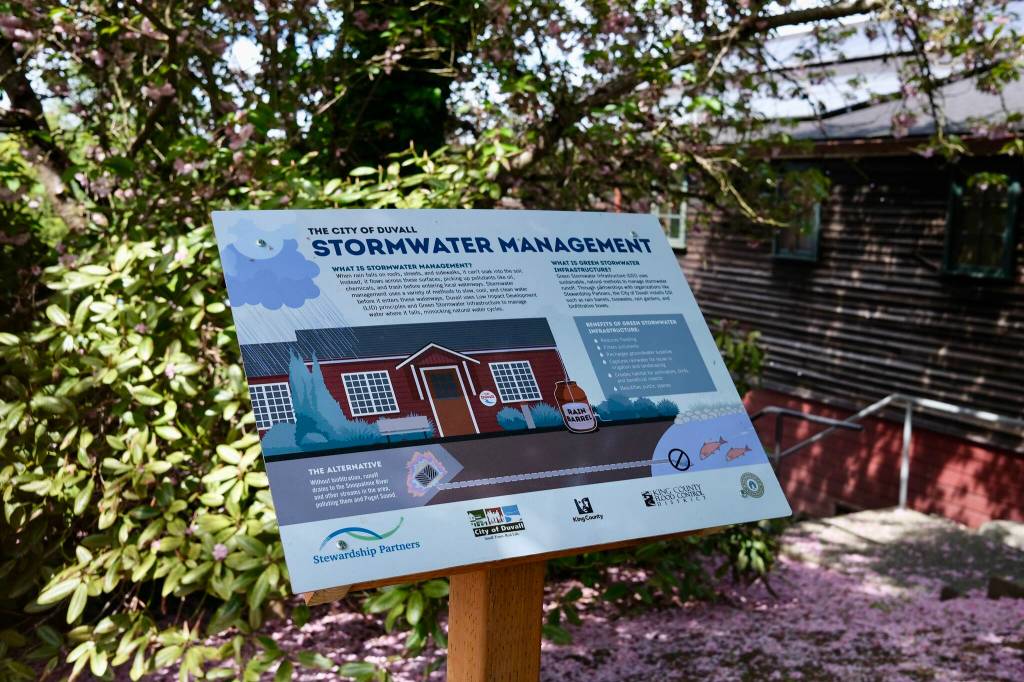
Many were involved in this project, including The Blacksmith Shop of Seattle, which made the box, MxM Landscape Architecture, which designed the surrounding area, and Dirt Corps, another Seattle organization that installs biofiltration boxes as part of its green infrastructure mission and inspired LaPointe. A King County designer made the infographic signage that sits in front of the box and explains how it works.
Funding for the project came from the King County Flood Control District’s Flood Reduction Grant Program, which is where most of the grants for similar projects come from, according to LaPointe.
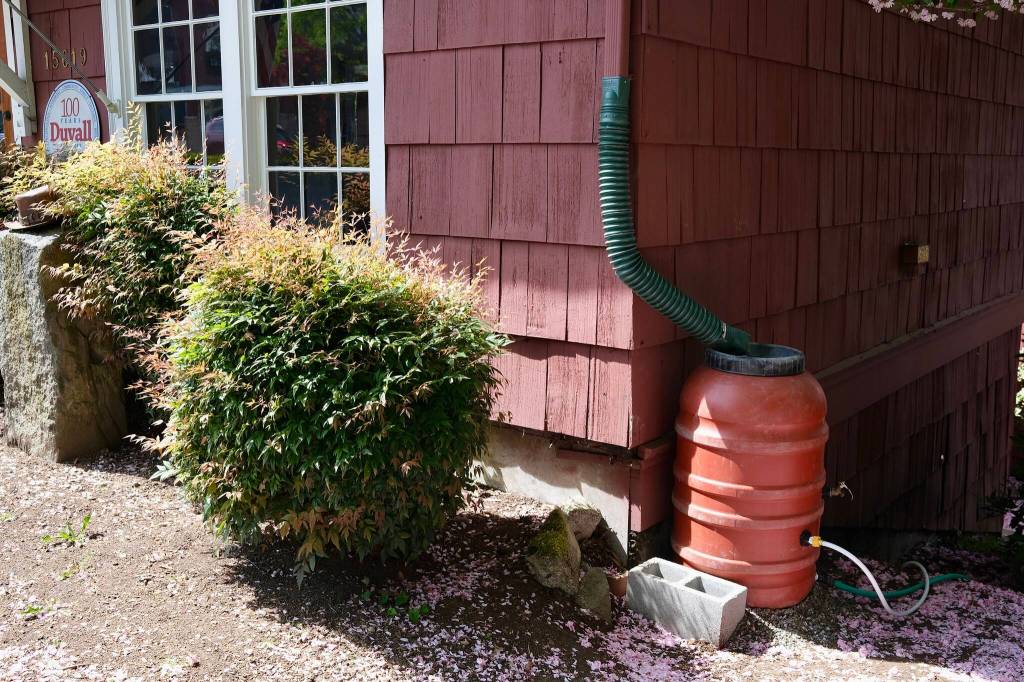
Previously, Stewardship Partners has installed stormwater solutions in the form of rain gardens at Carnation Farms, Carnation Elementary School and the Carnation Library. There is also an installation next door to The Grange, outside the Duvall Visitor Center.
Whether rain gardens or boxes, LaPointe hopes to build more infrastructure in Duvall and around the Valley.
“We’ve got huge problems with stormwater management,” he said, noting that the issue is worsened by the Snoqualmie River’s tendency to flood.
Stewardship Partners already has a Valley-specific program, called Snoqualmie Stewardship. Within it lies the Adopt-a-Buffer program, which “connects local businesses, community groups and individuals to farmers for tangible and measurable environmental restoration by creating habitat buffers along the Snoqualmie River,” according to the website.
Also on the website is the Snoqualmie Valley Stewardship Handbook, described as a “guide to living sustainably in the Snoqualmie Valley.”
“Stewardship Partners is very place-based,” LaPointe said. “Stewardship Partners is all over the place in terms of some of our other programs, but the Snoqualmie Stewardship Program, I’m trying to do everything that we do in Seattle [in the Valley].”
The stewardship story
Stewardship Partners, formed in 1999, is a 501(c)(3) nonprofit based in Seattle. When it was formed, the Puget Sound region was in a “steep ecological decline,” according to the nonprofit’s website.
As efforts to stop and reverse environmental damage began, Stewardship Partners was created to facilitate conversations with the landowners who wanted to help, starting with one farmer in the Snoqualmie Valley.
Today, the nonprofit continues to work throughout the Puget Sound region, particularly in sensitive areas like the Snoqualmie River basin. It primarily works with landowners, LaPointe said, though it has begun working with more businesses and municipalities.