Decades-long Snoqualmie Ridge development nears its end
Published 12:14 pm Thursday, April 16, 2026
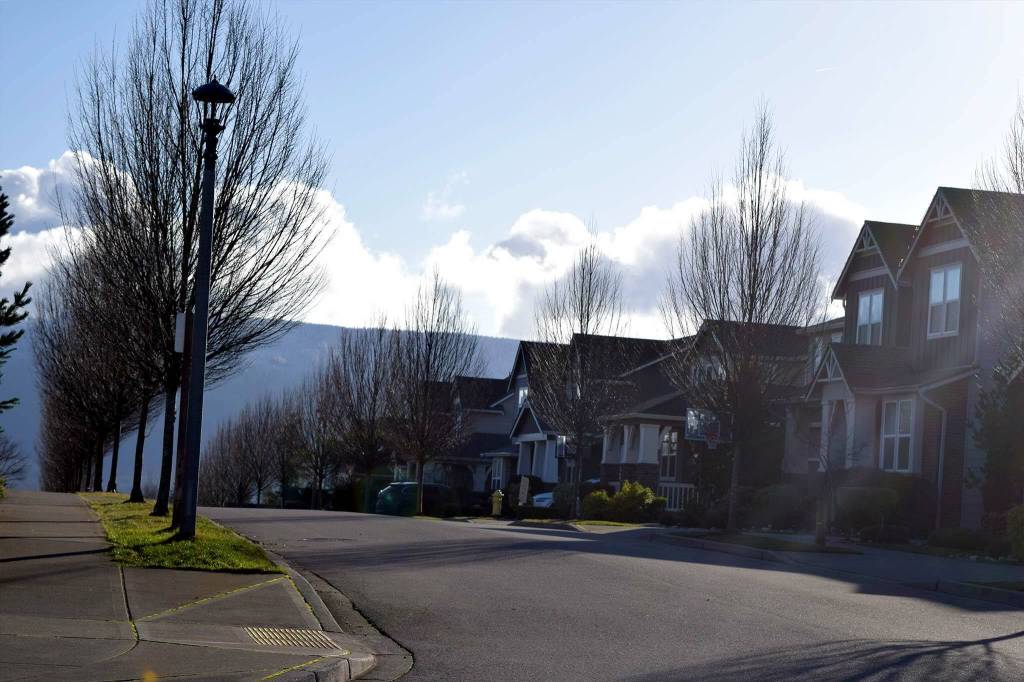
Nearly 40 years ago, a timber company decided to master plan a community with 5,000 homes on land previously dedicated to the lives and deaths of Douglas firs.
Now, a local residential developer is selling off homes in that community’s final new subdivision.
Timber Trails, a development by Tri Pointe Homes, has hit the market in Snoqualmie Ridge, “marking the closing chapter of one of the Eastside’s most influential planned communities,” according to a spokesperson.
This 46-home subdivision sits off of SE Jacobia Street in southwest Snoqualmie Ridge, close to Timber Ridge Elementary. It includes townhomes and duplexes in craftsman and farmhouse styles.
Though the Timber Trails interiors may be much more modern than the Snoqualmie Ridge homes built 30-some years ago, they align with the area’s original mission of being a pristine, master-planned community.
Bylaws provided by the Snoqualmie Ridge Residential Owners Association (ROA) have lengthy and specific design rules. The original guidelines were approved Nov. 6, 1996, and the Snoqualmie Ridge “Phase II” guidelines were published in 2005.
Homes are expected to reference the classic character of historic downtown Snoqualmie, using the architectural styles of “craftsman, cottage, bungalow, colonial and farmhouse.”
The neighborhoods have a “pedestrian-oriented design” so residents can avoid using cars for transportation and easily socialize with neighbors. (Though a 2015 Seattle Weekly article about the Ridge noted that “people simply don’t know, or care to know, their neighbors.”)
Home exteriors are required to minimize the view of garage doors from the street — explaining why many Snoqualmie Ridge homes have garages on the backside, accessed by an alleyway.
Above all, Snoqualmie Ridge was designed with the environment in mind, the bylaws say. Open spaces and wetlands were kept untouched; trails were installed throughout the neighborhoods; low-energy appliances were required to be included in all new homes.
This goal makes sense for the origins of Snoqualmie Ridge, originally conceived in the 1980s by Seattle-based Weyerhaeuser timber company. Weyerhaeuser decided it would be a better investment to develop real estate on its land near Snoqualmie than to continue raising and chopping down trees.
Weyerhaeuser approached the city of Snoqualmie with a request to annex the 2,200 acres, according to a 1987 article in The New York Times, rather than deal with the stricter zoning laws of King County.
Per the county’s 1985 comprehensive plan, certain rural areas were only allowed one house per five acres — quite the opposite of Weyerhaeuser’s plans for what it told the Times would be an “urban village.”
Snoqualmie and King County agreed to the annexation, and construction began in the 1990s. According to the Times article, the Ridge project was at that time planned to add 18,000 people, more than quadrupling the population of the “depressed timber town.”
In the article, James Nyberg, then-president of Snoqualmie Ridge Associates, is quoted saying that the project was “very risky,” but that he was not worried about marketing it.
“What you’ve got here is a place that gives you a lifestyle,” he told the Times. “You’re 30 minutes from the opera and 30 minutes from skiing.”
Though the times have changed, Snoqualmie Ridge continues to be marketed as a great place to live. Homes in the area are currently selling for an average price of $1.06 million, according to a Redfin report, and typically sell in less than 30 days, according to Tri Pointe.
In a Tri Pointe news release, vice president of community experience Tricia Lynn said Timber Trails is “a rare moment where a community of this scale is truly coming full circle.”