Flood Patrol is King County’s ‘eyes and ears’ in flood emergencies
Published 9:04 am Thursday, January 8, 2026


When an atmospheric river hits King County, residents hunker down, watching the rain and wind conspire from the safety of their homes.
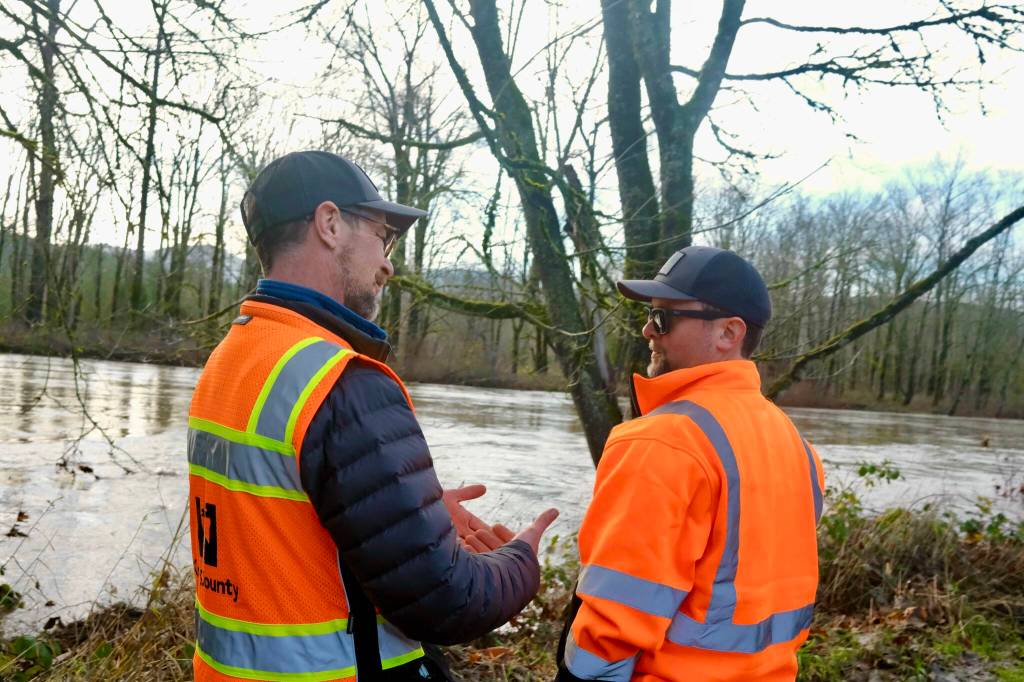
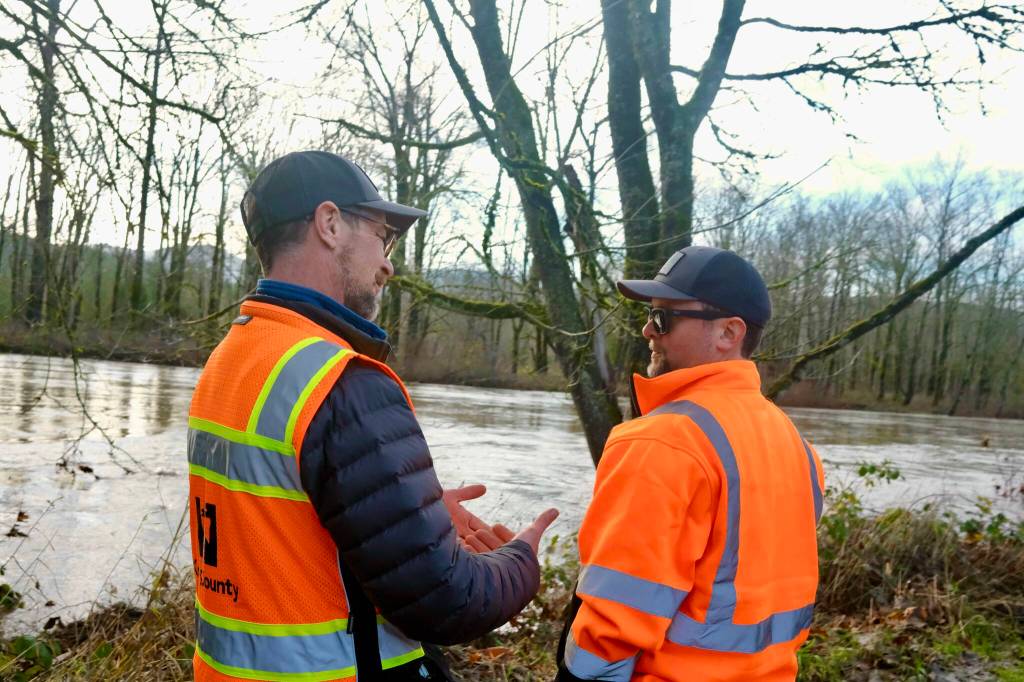
But outside, a group of dedicated volunteers known as Flood Patrol is on the ground, watching for damages and ensuring that those residents will continue to be safe.
During December’s historic flood event, 88 King County Flood Patrol staff members covered 1,902 miles and worked a combined 952 hours.
“This work is physically demanding and often unseen, but it is a critical element of protection,” said a Dec. 31 King County press release.
Flood Patrol is a service of the King County Department of Natural Resources and Parks (DNRP), specifically the Water and Land Resources Division (WLRD). Members of Flood Patrol are DNRP staff who volunteer to be on the ground during the rainy season. These volunteers have a “wide range of professional backgrounds, including engineers, capital project managers and ecologists,” according to DNRP.
King County sends out Flood Patrol once a river has hit stage 3. In December, five out of six major King County rivers reached flood phase 4, defined as severe flooding with potentially threatening impacts to life, property and critical infrastructure.
Flood Patrol members work in pairs to better maintain safety in hazardous conditions. There is one pair per river, working in 8-hour shifts, including overnight.
The teams assess the integrity of levees, reinforce them and quickly repair them if they breach.
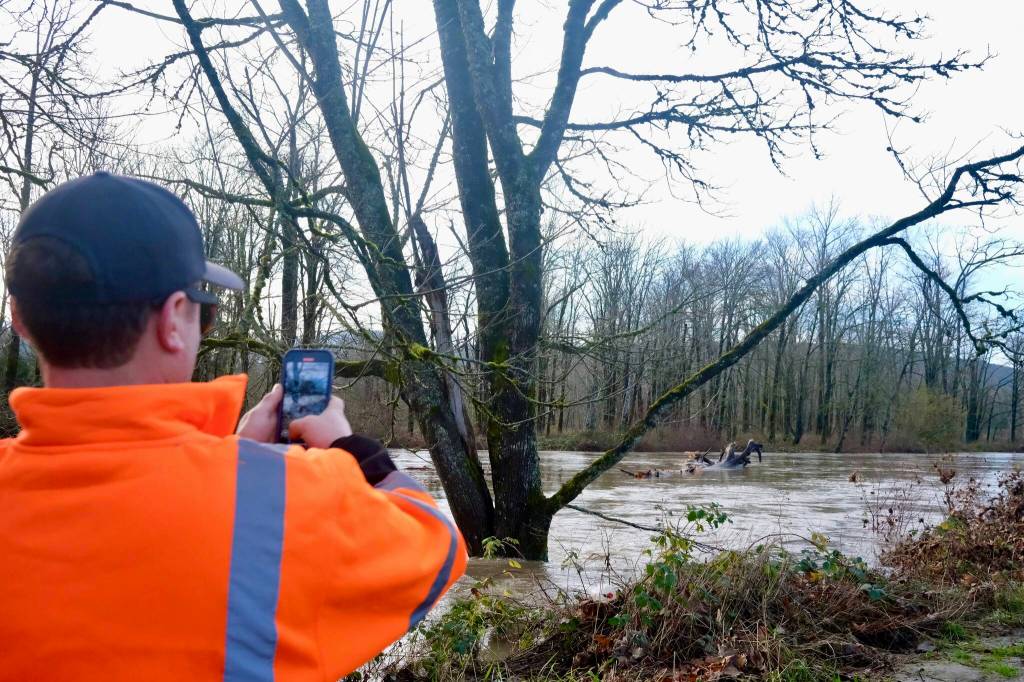
“We have a specific route, we have an iPad, and they use an app called Field Maps, and it basically tells us where to go,” said Thomas Bannister, Flood Patrol member and WLRD environmental scientist. “Sometimes we’ll drive on levees. We have easements on a lot of these facilities, and so we will drive on the facilities and make sure that there’s no potholes or any damages to the facilities or trees down.”
In the app, he said, they note physical observations, such as erosion, flood waters overtopping roads and the performance of previously completed capital projects.
These notes are then made available to staff in the Flood Warning Center, as the center and Flood Patrol “really work in tandem,” Bannister said.
While Flood Patrol works to collect real-time data, the Flood Warning Center communicates the necessary information to various government agencies.
“People don’t know or care [where the information is coming from]. They just want the answer,” said Saffa Bardaro, a WLRD spokesperson. “The Flood Warning Center [is] doing that information collection and making sure everybody’s got the same information. But this is eyes and ears and boots on the ground looking at the actual facilities.”
While Flood Patrol is not involved in emergency evacuation, the data collected by its members can inform decisions to call for an evacuation.
“We’re just the eyes and the data collectors,” said Seth Ballhorn, Flood Patrol member and WLRD project manager.
Bardaro added: “You’re feeding the information up to the elected officials, and then they’re ultimately making that decision.”
In the Snoqualmie Valley, the Flood Patrol route goes as far north as NE 124th Street outside Duvall. But it does not continue through the town of Duvall itself, which can become an island during flood events, as it did for a day or so last month.
“The route doesn’t go any farther than that because we don’t want to send patrol out and then they get stranded,” Bannister said. “And then we can’t do our job, and we have to get rescued.”
Safety is a top priority for Flood Patrol, the members said. If they aren’t safe, they can’t be of service — and their work truly is a service.
“Our regional coordinated response to flooding unifies the efforts of a lot of city, county, state and federal agencies — and many of those actions are based on the real-time intel collected by our talented Flood Patrol,” said John Taylor, DNRP director, in a Dec. 23 news release. “Our emergency response would not be nearly as effective without our Flood Patrol.”