Prisoner of War
Published 2:29 pm Thursday, October 2, 2008
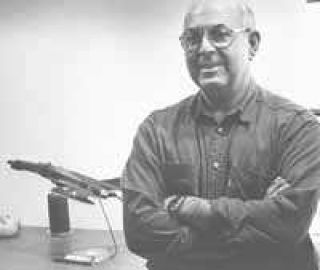
More than five hours after Joe Crecca’s F-4C Phantom II erupted in brilliant orange flames outside
Hanoi, North Vietnam, and following the second recitation of his name, rank,
serial number and date of birth, a Viet Cong soldier looked the young
Air Force pilot in the eye and said flatly, “Crecca, you’re going to die in here.”
Crecca, bloodied, bruised and dressed only in a T-shirt and
shorts, didn’t doubt the soldier.
“He convinced me that that’s what was going to happen,” he said.
Only he didn’t die. He lived. And after a few months, the
interrogations and torture grew less frequent.
But that was only months into his stay at the “Hanoi Hilton,” the
name given to the network of prisoner-of-war camps dotting the North
Vietnamese landscape. The North Bend resident still had six more years to go
before he’d step off a plane in the United States, uncertain as to what his
future held.
The mission
On Nov. 21, 1966, Lt. Joe Crecca and Lt. Gordon Scott “Scotty”
Wilson were among eight pilots selected to carry out two bombing raids on
Hanoi. The two were paired together in an F-4, with Wilson assuming “guy
in front,” or GIF, duties, while Crecca was the “guy in back,” or GIB,
handling all the flight plans, route maps and calculations.
“We were supposed to hit a JCS, that’s Joint Chiefs of Staff,
selected target,” Crecca said. “We were
briefed … that there were two JCS targets
that had come down from headquarters that we were supposed to hit. And
I was one of eight guys, or four crews, who was selected to go hit these
targets because the flight leader wanted to go in and not have to go back.
They were very hot targets.”
Crecca was one of the most experienced backseaters in the 480th
Tactical Fighter Squadron, part of the 366th Tactical Fighter Wing. In
little more than three months _ he had arrived in South Vietnam Aug. 14,
1966 _ Crecca flew 75 missions into North Vietnam and had a total of 87
missions. For every 20 missions into North Vietnam, pilots had their
stay cut short by a month. Crecca originally signed up for a yearlong tour of
duty, but he figures at the pace he was flying missions, he would have
been home much sooner.
“If I hadn’t gotten shot down, I would have been home in five
months tops,” he said.
According to the flight leader, the F-4 crews would fly over Hanoi on
the first day and knock out a large complex housing petroleum,
lubricants, barracks, staging areas and ammunition dumps. The next day, they
would return to drop bombs on a power plant.
They would arrive over their first target in “Bullseye,” the nickname
for Hanoi, at 11:53 a.m. Nov. 21, drop their bombs and retreat as fast as
they could from the hail of surface-to-air missiles and anti-aircraft fire.
Crecca and Wilson never made it to the target.
Life’s ambition
Crecca wanted to be a pilot as far back as he can remember. Growing
up in Bloomfield, N.J., he’d pretend he was flying high up in the air.
“I’d drive my parents nuts with airplane noises going around
the house,” he said.
At the age of 25, he graduated from what is now the New Jersey
Institute of Technology with a bachelor’s degree in mechanical engineering.
He joined the Air Force in 1964.
“In fact, I joined the Air Force without ever having flown an
airplane,” he said. “I passed all the
tests. Went through pilot training and graduated and had no previous
experience flying an airplane, so it was pretty challenging.”
The lack of hands-on experience never deterred him, and he’s still
in the air to this day as a captain with Federal Express, flying large
transport planes.
“There wasn’t anything else I wanted to do. There wasn’t any
other occupation or career goal,” he said.
`Dead duck’
The F-4C Phantom II is a twin-engine jet capable of speeds of
more than 1,400 miles per hour and able to carry more bombs than a B-17.
They were fast, agile and during the Vietnam War, they were state of the art.
The planes were so good that the 480th Tactical Squadron, which
was made up of F-4s, garnered widespread acclaim in its ability to shoot down
the Russian-made MiG-21s flown by the North Vietnamese. At one point
during the war, only eight MiG-21s had ever been shot down, five of them
by the 480th.
It was in this same plane that Crecca and Wilson flew from Da
Nang Air Base, where they were stationed, into North Vietnam. They were
20 miles from Hanoi and their first-day target when a surface-to-air missile,
or SAM, slammed into the rear of the airplane.
It was 11:50 a.m. _ only three minutes left to the target.
“We referred to the missiles as `flying telephone poles’ because they
were so damn big,” Crecca said of the SAMs. And they were fast.
Loaded down with bombs, an F-4 could manage about 700 miles per hour, while
a SAM traveled at speeds in excess of 2,000 mph.
They were also smart. A SAM incorporated radar technology to
track its prey and zero in on it.
Crecca had witnessed SAMs in action before, and pilots had
developed tactics to elude them.
“You could avoid it if you knew they were there, if you knew
where they were coming from. But you had to be able to see them,” Crecca said.
“I’d seen SAMs on previous missions and avoided them. They’re
not that difficult to avoid. But if you can’t see them, you’re a dead duck.”
The trick was to dive and gain a lot of speed, then pull up and
climb into the sky. With a steep enough angle, the SAM wouldn’t be able
to follow the plane. However, pilots had to be careful not to dive below
10,000 feet and into the range of ground fire.
After watching American pilots elude their SAMs, the North
Vietnamese altered their strategy. Instead of launching a single SAM, they’d
launch a second missile as the plane made its dive. With the pilot frantically
trying to evade the first SAM, they often didn’t see the second missile until
it was too late.
Crecca and his frontseater, Wilson, a 1964 Air Force Academy
graduate, never saw the first missile, which hit the plane in its blind side.
“We didn’t know it was coming because it came from, as we called
it, `dead six,’ straight behind us,” he said. “And we didn’t have any
electronic warning gear to tell us about the approaching SAM.”
In the cockpit of the F-4, Wilson told Crecca to “get out” and ejected.
“That convinced me to do the same thing,” Crecca said. Behind him,
the plane had erupted, leaving a trail of flames 200 to 300 feet long and
heavy, black smoke.
His parachute opened up just under 10,000 feet, and he struggled
to find his bearings. Spying the wreckage of the plane beneath him, he
used it to orient himself. As he was descending, he saw Wilson hanging
motionless in his parachute.
Since the first SAM had hit the plane, the second missile
wasn’t needed. In those cases, the North Vietnamese detonated the second
SAM while in midair. Crecca said shrapnel from the second missile killed
Wilson after his parachute had opened.
Exactly two decades later, on Nov. 21, 1986, Wilson’s remains
were brought back to the United States and interred at the Air Force Academy
in Colorado Springs, Colo. Crecca attended the ceremony.
“His remains came back 20 years after we were shot down,” he said,
then repeated, “Twenty years to the day that we were shot down.”
Living with fear
The possibility of being shot down by the North Vietnamese was
something pilots confronted each and every mission.
“When you join the military, you have to
know something of what you’re getting into, and it
just becomes normal.”
Joe Crecca
former prisoner of war
“You just accept it. You realize that one of those rockets