Rooms with a view
Published 1:59 pm Thursday, October 2, 2008
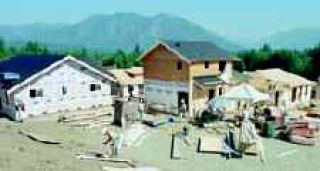
SNOQUALMIE – If you passed by Snoqualmie Ridge last week, chances are you heard, or at least saw, a massive project in progress.
It wasn’t the usual land moving and house erecting that has given Snoqualmie Ridge its character, but a project within a project.
What you heard was the hammering, sawing and working away at houses that probably would never have been built if not for the upwards of 500 people building them.
The Habitat for Humanity of East King County blitz build, which officially started last Aug. 6, hopes to build 20 houses by the end of this week. With the progress witnessed the first week of construction, Habitat officials believe they are well on their way.
“We are right on schedule,” said Jean Ann French, manager of resource development for Habitat for Humanity of East King County.
Visitors and workers alike have seen the rapid progress made in just a few days. When workers arrived last Monday, all they had were 20 slabs of cement and piles of wood. By midweek, however, the houses had already taken shape and the look of a neighborhood was starting to emerge.
“I can’t believe it,” said state Rep. Glenn Anderson, R-5th District, who visited the site on Wednesday. “They are going up so fast.” The Snoqualmie blitz build is the largest Habitat project in the Northwest and a part of a vital construction spree that Habitat is encouraging. Since smaller Habitat projects put up only a couple of houses and garner little attention, the “blitzes” have become invaluable for Habitat to build both houses and awareness.
“The small projects have been a slow, constant drain,” French said. “We still need them, of course, but with the blitz, we can bring a lot more together.”
Tents, free soda machines and free back massages were just a few of the amenities on hand and free of charge to the legion of volunteers. Although most of the volunteers were from the Puget Sound area, people have come from all over the country to work; with some working on their eighth project for Habitat.
“It’s a life-changing experience for the volunteers,” French said. “They come away with a new way of thinking.”
Perhaps the only people having more fun than the volunteers who were helping the houses go up, were the families who would eventually be moving in who were working alongside them. Habitat requires the families put 500 hours of “sweat equity” into their house, a donation they were all too willing to give.
“I still can’t believe it, it hasn’t really sunken in,” said Snoqualmie resident and future homeowner Kimberly Fredell, as she took a break from building her house. “I never thought I would own a home.”
The 10-acre site, which was donated by Weyerhaeuser Real Estate Co., will eventually have 50 houses. The project is part of an initiative pushed by Snoqualmie Mayor Fuzzy Fletcher to have more affordable housing in the Snoqualmie Valley. When Weyerhaeuser and the mayor’s office were ironing out the deals of the Snoqualmie Ridge development, Fletcher suggested Habitat get involved in order to cut down on the red tape involved in guaranteeing affordable housing.
“It’s been a win-win deal for everybody,” said Frank Mendizabal, spokesman for Weyerhaeuser. “This has been a good experience and we will continue it.”
“Everyone has to be able to afford the American dream,” Fletcher said as he toured the site last Wednesday. “We’re not going to stop here.”
Fletcher said the housing problem wonOt get any easier. According to Fletcher, the mean income in the Valley has gone above the county average, causing all housing prices to rise. French said finding an affordable house is often illusive in the affluent Puget Sound Region.
“There is need here, without the imagery of poor areas, so the public does not know about it, especially on the Eastside.” French said. “It’s difficult for people to understand because they don’t see it.”
Fletcher remains optimistic of the Snoqualmie Ridge project and others that it might spawn. He said affordable rentals and condos could be in future plans to make the Valley a more affordable place to live.
“I’d like to think of this as thinking “outside the box,'” he said. “We don’t look at everyone else to see what they are doing. We do it our own way.”