Still sending a strong signal
Published 1:44 pm Thursday, October 2, 2008
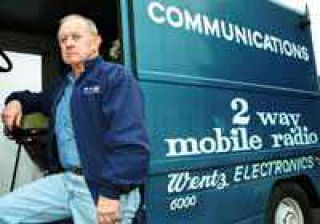
SNOQUALMIE – Forty years of doing the same thing may seem monotonous to some people. Not so for Ed Wentz, and that delights the people who have depended on him for the past four decades.
As owner and proprietor of Wentz Electronics, Wentz has seen, or overseen, pretty much every industrial radio repair, electronic tinkering and gadget maintenance in the Valley since his shop first opened in Snoqualmie in 1962.
Wentz has also volunteered, been elected and served in many civil servant jobs in Snoqualmie. In fact, one would be hard pressed to find someone in the Valley who does not know him or has not been served by him, directly or indirectly, in the last 40 years.
All this from a man who runs a little electronics shop on King Street.
“Ed is just … Ed. He’s a down-to-earth guy,” said Howie Perryman, a retired North Bend firefighter. “You really have to get to know him to understand him.”
Wentz grew up in an electrical family, the son of an electronic journeyman in Kirkland. When he graduated from high school in 1948, he joined the Navy, where he learned a lot about radios and the electronics needed to power them.
After working at Weyerhaeuser Co. and at Shinner Electronics in Snoqualmie, where he fixed something called a “color television,” he was hired at an electronics shop in Seattle called Tele-Car Communications in 1959. Wentz worked mostly out of his garage for the company, and had a television electronics business on the side that he called Wentz Electronics. When Tele-Car folded a couple of years after Wentz started, he bought some of its equipment and got hold of its lists of clients and suppliers.
He said he started his new radio repair business almost overnight, with the new and improved Wentz Electronics opening on New Year’s Day 1962.
“I had an instant business,” he said.
Wentz’s new business was not only new to him, but to the nation as well. He said there wasn’t any need for radio repair shops until the late 1950s when the Federal Communications Commission deregulated radio frequencies, allowing private businesses to use them. When logging companies, such as Weyerhaeuser, started to use radios, an industry was born. Even though Weyerhaeuser is not the force it used to be in the Valley, Wentz said he still does work for independent loggers.
These days, most of his work comes from the government sector, installing and repairing radio equipment for school districts and fire stations.
Outside of Chehalis, Wentz said his shop is the only one he knows of that does the kind of work his does. His talents have taken him to sites as far away as Puerto Rico, and he makes regular service visits to a fire station on an island near the Canadian border in his private plane.
Wentz has a prominent position in his industry in Western Washington, but he is not eager to expand his business beyond his four employees, most of whom are family members.
“I have enough trouble keeping track of four people,” Wentz said.
Wentz may not be able to expand even if he wanted to. His son, Bob, one of the two sons that work for him, said his father and his style of business will have a hard time competing with large corporations that benefit from government tax breaks. He added it is difficult for a small business like his father’s to stay afloat and still be honest.
“Small businesses and honesty don’t go together anymore,” the younger Wentz said. “But he [Ed Wentz] would never fudge on his taxes. Never.”
Bob Wentz is confident, though, no matter how much or how little business the shops gets, it will always be a part of Snoqualmie.
“Wentz Electronics is here for good,” he said.
One reason Wentz Electronics has had so much success over the years is because it has changed as the industry changed.
“Whenever he got something new, it was for the business,” Bob Wentz said. “We had one of the first snowmobiles in the Valley to get to the radio tower [on Rattlesnake Mountain]. Life was never boring.”
Wentz said there is little that can be done anymore on site, and most radio work has to be brought back to his shop. He has a small fleet of three vans to haul men and radios back and fourth to his Southeast King Street office, which has older radio parts sitting next to the latest laptop computers. After four decades of radio and electronic work, Wentz is not daunted by the increasing complexity of the machines on which he works.
“It’s challenging to stay updated, but the manuals are enough to keep up,” Wentz said.
Outside of running his business, Wentz has been a prominent community member. Among other positions, he served a six-year stint on the Snoqualmie City Council in the 1970s and was a volunteer firefighter for 37 years. Wentz’s involvement with the fire service gave him as much to do as his business did, and everyone involved with the volunteer fire service of the 1960s, ’70s and ’80s has fond memories of the short but formidable firefighter.
“When you became a new firefighter, someone had to sponsor you and Ed was my sponsor,” said Dean Martin, a retired volunteer Snoqualmie firefighter. “He knew his stuff and I learned a lot from him.”
Many memories of the 1990 flood involved Wentz and his service to the community. When flood waters rose, the fire hall needed to be abandoned. As other temporary locations started to take on water, Wentz realized that his shop and home were one of the few dry places left. He set up a temporary fire hall at his shop and the volunteer firefighters at his home, a move many saw as a crucial contribution to the disaster.
“Ed Wentz’s was probably the only corner in this town that didn’t have water on it in 1990,” said Lee Briggs, a retired volunteer Snoqualmie fire chief. “He was that type of a person where we moved right into his business and set up all our radios there.”
Other fond memories come from the community involvement Wentz and other firefighters gave to the Valley. For years, the firefighters organized Snoqualmie Days and to this day, Wentz still drops ping-pong balls from a helicopter with prizes inside.
“Ed loves that stuff,” Perryman said. “He is like a little kid in a candy store. He was always excited about what went on and how it went. Everything meant a lot to him.”
Others remember the down time spent at the fire hall, drinking beer and a game of rolling a keg down the street with two fire hoses.
“Our lives, night and day, were the fire service. We partied together and we cried together,” Briggs said. “It’s kind of like a business now. You ring the bell like a business. They’re still nice people, don’t get me wrong. We were just all neighbors then.”
To Wentz, sticking with the fire service for so long was as much a part of his thorough personality as it was a sense of duty.
“When I start something, I usually stick with it,” Wentz said. “Kind of like this business, I guess.”
To many who have known Wentz most of his life, he is an embodiment of the old town of Snoqualmie and of the way things use to be. Talk of “the old days” may sound trite, but it’s hard to argue in the face of men like Wentz who gave every waking moment of their days to work and community.
“He’s from a different era,” his son said. “We’ve become replacement artists. I grew up learning how to fix things because what little money we had went to paying for the house, food, a little for gas and there wasn’t much left over. He has very few credos in life, but one was that if your honest with me, I’ll be honest with you. I don’t see that much any more.”
Wentz’s many friends agreed that he belongs to what they see as a dying breed of men.
“The world has changed so much that there is not many of them left,” Perryman said.
Wentz recently turned 71, but he is unsure of when he is going to retire. Although his employees do most of the field and repair work these days, Wentz is responsible for the administrative oversight of the shop, which, he said, is a full-time job. He is no longer a firefighter and he said he should start thinking seriously about retiring when his 75th b