Glen Anderson
Published 2:31 pm Thursday, October 2, 2008
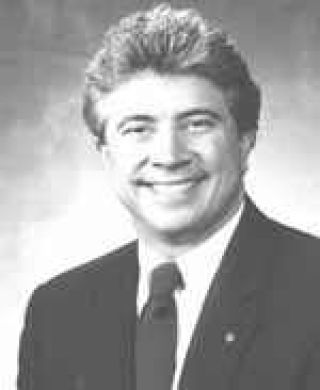
5th District, House of Representatives, Position 1
1. Name: Glenn Anderson
2. Age: 42
3. Political party affiliation: Republican
4. Occupation: Business consultant
5. Family members: Wife, Elisabeth, dogs Sasha and Disa,
cats Bagman and Idaho
6. Why are you running for office? To protect individual
liberties, make state government more responsive to our needs and ensure that
the public gets its money’s worth.
7. What are the issues that the constituents in your area would
like you to address? Phone calls, e-mails and doorbelling across the
district, from Redmond to Black Diamond and Snoqualmie Pass to Issaquah,
have identified bureaucratic reform, education, transportation and property
taxes as being the key issues of voters.
8. How would you address those issues? Bureaucratic
reform: To really reform state bureaucracy, we need to implement zero-based
budgeting, agency performance audits, contacting out of non-essential
services and technical assistance programs to help people comply with laws
and rules before penalties and litigation.
Education: Establishing a nationally competitive compensation package
for entry-level teachers, including housing and continuing-education
allowances, improving teacher accountability and performance standards,
approving public charter schools and reducing class sizes in K-4 will
continue our progress in education reform.
Transportation: Dedicating a portion of the $2 billion in state sales tax
revenues for automobile-related products and services to road construction
to address our traffic crisis, including bus transit right-of-ways. Evaluate the
recommendations of the governor’s Blue Ribbon Transportation
Commission for the Legislature and pass a common sense, long-term transportation
package to meet our needs. Property taxes: The state portion of
property taxes represents approximately 25 percent of each person’s
property-tax bill. I support phasing out the state portion of property taxes to ease
the tax burden across the board. With a healthy economy, this will not
undermine essential state government services or infrastructure.
9. In the Snoqualmie Valley, as well as throughout the
Puget Sound region, growth is a major concern of many residents. Is
the state Growth Management Act effective in helping local
governments make smart decisions about development? Should it be
changed? How should it be changed? The Growth Management Act is a
good guidance tool for local governments. While GMA may be imperfect,
we want to ensure that growth-management decisions remain local. We
don’t want local land-use decisions made in Olympia by state legislators from
Spokane or Yakima. The primary concern I hear is that
infrastructure concurrency requirements may need to be reviewed. Integrating the
GMA with the Shorelines Act and SEPA would help eliminate conflicting
regulations and would improve environmental conservation progress
more quickly, at a lower cost.
10. What can state legislators do to address concerns about
protecting salmon and salmon habitat? The federal Endangered Species
Act is a law that can have very heavy, negative consequences on our local
and regional economy. We are the first large urban area in the nation to
have it applied as such. Our local commitment to long-term protection,
enhancement and restoration of salmon habitat must be sustainable by our
local economy or else supported by large federal subsidies. To address
the salmon issue effectively, the state must consolidate environmental
protection laws to remove conflicting regulations to free up time, tax dollars and
improve compliance.
11. Water is becoming scarcer as more people move into the
area. One example of that is the North Fork of the Issaquah Creek
drying up this summer. What can be done to protect our water resources?
We do not have a water-scarcity problem. We have a water-management
problem. We need to apply solid, science-based water-management and
retention techniques to ensure an adequate supply of clean water for both
our growth and environmental conservation requirements. The state
Department of Ecology water-rights permitting process must be reformed to
enable local governments to meet community needs.
12. Lastly, why should a voter cast his or her ballot for you?
I live in this community, in Fall City, and know the diversity of concerns of
the people who live here. I will listen to the needs of my neighbors,
“shoot straight” with them about the facts
and try to help resolve their issues with state government. In all issues,
state government should “get it right”
and provide the public its money’s worth. I ask for your vote on November 7th.