All aboard: Northwest Railway Museum ready to kick off train season
Published 2:15 pm Thursday, October 2, 2008
SNOQUALMIE – You can tell it’s spring by the sound of the train whistle echoing across the Valley.
The Northwest Railway Museum is busily preparing for another season of shuttling passengers back and forth between Snoqualmie and North Bend along six miles of picturesque scenery, and transporting them back in time, as well. Opening day is April 1, and the first month will feature train rides on both Saturday and Sunday.
More than 75,000 people visited the museum last year, and visitation has increased by 5,000 each of the last three years.
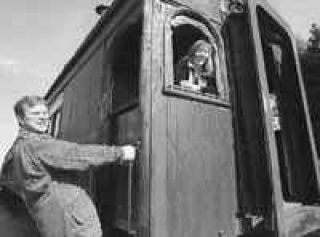
The museum’s Snoqualmie Valley Railroad is a labor of love for many. Trains are staffed by volunteer crews, and museum supporters donate their time and energy to helping out in the museum.
“Our volunteers have backgrounds in everything,” said Jennifer Youngman, marketing and volunteer coordinator for the Northwest Railway Museum, the only railroad museum in the state of Washington that has its own engines, cars and track. “Some of them do have a railroad background themselves. Some of them have family background in the railroad, and this is their way to experience what their grandfather or uncle or whoever experienced.
“And some have just always loved trains and never had any experience or family background or anything in it, and this is how they’re fulfilling that dream.”
It takes a crew of four to man a train ride. Like others who work in the railroad industry, each member of the train crew must pass a written rules test and spend time training with more experienced volunteers.
All that separates the Snoqualmie Valley Railroad from larger corporations such as Burlington Northern Santa Fe is the length of its track, said Richard Anderson, curator of operations for the museum.
“We’re not quite as long as the BNSF, but we are just as wide,” he joked.
The local railroad is responsible for the upkeep and repair of its six-mile track, as well as crossings and bridges over which the train runs.
“This is an ongoing issue for a railroad. A railroad is, in fact, a very capital-intensive business, whether you’re running BNSF’s railroad or whether you’re running the museum’s Snoqualmie Valley railroad,” Anderson said.
Last year, more than 200 museum members took part in a special train ride to Snoqualmie Falls, but the track had to be improved before it could happen.
“We’ve done a lot of infrastructure upgrades up there,” Anderson said. “There’s been track rebuilt, there’s been a new bridge put in – all kinds of improvements that had to be made to our line.”
In the past, the train stopped at the Falls, and Youngman said the railroad hopes to reinstate the practice in the future.
“That’s something that we’ve been doing a big push on … and we’re getting closer,” she said.
The railroad recently finished two crossings in Snoqualmie on River and Newton streets, and later this year those crossings, as well as one that cuts across North Bend Way, will have new signals and gates.
“Railroad crossings are very costly projects,” Anderson said. “They involve a lot of dirt excavation and a lot of very careful alignments. It’s a lot more complicated that building either a regular railroad track or a road, because we’re building a road and a railroad track all in the same space.”
The museum boasts 70 large “artifacts” – pieces of equipment that weigh several tons. They include an Army medical service hospital kitchen car, a rotary snowplow built in 1907 and three locomotives. Much of the collection was acquired in the 1960s and ’70s, and Anderson said the museum’s focus now is to preserve it. One coach is being refitted with new wood cladding and sheathing, and the museum used the Washington State University Forest Products Laboratory to determine the type of wood that would have been used in 1912, the year in which the coach was built.
“A couple of fellows right now are working on planing it down, and then it will be cut and shaped,” Anderson said.
In the future, the museum hopes to have a facility dedicated to preserving its collection and is currently raising funds for a planned Conservation and Restoration Center that would be built along 394 Place Southeast.
The center would be built in three phases and would cost a total of $1.46 million. It would feature a viewing gallery, work areas and inspection pits for steam and diesel locomotives. About $350,000 has already been raised, and the museum is looking to increase that number to $414,000 by this summer.
For the month of April the train will take off four times a day in Snoqualmie and North Bend on Saturdays and Sundays. Starting in May and continuing through the remainder of the season, there will be six departure times in both cities.
Youngman said one event that’s new this year is “Mothers Ride Free,” which takes place on Mother’s Day weekend.
“Last year, we started a special event on Mother’s Day only on Sunday,” she said. “This year we’re expanding so that it’s Mother’s Day weekend, Saturday and Sunday, and mothers ride free with a paying child of any age. So that means that a 70-year-old child could take their 90-year-old mother, and that mother would ride free.” It compliments a similar Father’s Day weekend event, “Pops On Us.” Also new this year are weekday train rides on Aug. 2 and 14.
As the train season continues to grow, so does the museum’s membership rolls. Participation in the children’s Cecil the Diesel Club has grown to move than 130 members, up from about 35 members 1 1/2 years ago. And the yearly Santa Train has provided a good incentive for some to join.
“A lot of people join the museum … for advance notice of Santa Train. That’s a big draw for a lot of people who join,” Youngman said.