Fire districts consider combining
Published 11:32 am Monday, December 21, 2015
North Bend and Carnation-area residents may be asked to consider combining their fire protection districts early next year. Officials with Fire District 38, covering unincorporated parts of North Bend and Snoqualmie, and Fire District 10, covering unincorporated Carnation, as well as May Valley, Preston, and Tiger Mountain, are discussing a merger of the two districts to keep costs down and maintain their service levels.
“It’s a question of sustainability,” said Fire Authority Planning Chair Mike Mitchell. “Working together as one fire authority would stabilize funding for emergency services and is more efficient for taxpayers in both fire districts.”
The Regional Fire Authority is the group that, with representatives from districts 10 and 38, has been examining the possibilities of the merger and planning a series of public meetings in February to get voters in both areas on board.
Mitchell, also a Fire District 10 commissioner, said the district has considered and abandoned various merger ideas over the years, but the possibility of combining districts 10 and 38, both part of the regional Eastside Fire and Rescue partnership, became a discussion topic in early 2015.
“We just started this, this year,” said Mitchell in a phone conversation with the Record. “The districts are shrinking with annexations from the cities, and as we each become smaller, there’s an economy of scale for us to combine.”
Fire District 10 covers covering 129 square miles and about 30,000 people. Fire District 38 covers 24 miles and about 10,000 people.
Under the combined fire authority, funding for emergency services would come primarily from a fire protection levy of $1 per $1,000 of a property’s assessed value. Additional revenue would come from a fire benefit charge, something district 10 has already implemented, but 38 has not.
The fire benefit charge is a fee added to property owners’ tax bills. It is established by district boards through a public process and approved by voters every six years. The benefit charge is exempt from the $5.90 per thousand maximum tax rate allowed by the state, and not directly related to the property’s assessed value. Smaller structures (such as single-family homes) are charged less than larger buildings because it costs less to defend them in a fire.
“There are different rates for different types of structures,” Mitchell said.
The fire authority would develop its benefit charge based on Fire District 10’s formula, considered successful since voters overwhelmingly approved renewing the charge in the November general election. In 2015, the owner of a 2,500 square-foot home with a two-car garage paid $216.89.
All property owners have the right to appeal their assessments.
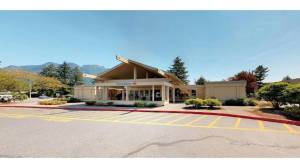
Property owned by the districts individually would be combined into the ownership of the new fire authority, as well. That includes the $5 million North Bend Fire Station, Station 87, built in 2013. The station was a joint project of the city and the fire district, and voters in both the city and the district had to approve the bond to build it.
Since North Bend is also a partner in Eastside Fire and Rescue, the transfer is primarily a legal distinction, not affecting the day-to-day operations of the station or the district’s firefighters.
“They’re all employees of Eastside Fire and Rescue,” Mitchell said.
Officially, they’re all employees of Fire District 10, which serves as the legal employer for contract bargaining purposes.
Neither fire district board has yet voted on bringing the proposal to their voters. As the Regional Fire Authority, members of both districts are planning a series of public meetings to share information, and gather public feedback on the proposal.
“We’re looking to have the public open meetings by the first part of February,” said Mitchell, and votes from both district boards by the end of that month in order to get the measure onto the April 26, 2016 special election ballot. The filing deadline for that election is Feb. 26.
Mitchell said the fire authority is aiming for the April election, rather than a November election, so the issue doesn’t “get lost” among the other general election issues — including the race for U.S. President.
Long-term, the fire districts say working together as one fire authority would sustain emergency service levels for the areas they serve and strengthen the Eastside Fire partnership. By joining together, their fixed costs such as equipment and administrative operations, would be shared by more people, which is more efficient for taxpayers.
For the proposal to take effect, it will need approval by 60 percent of voters in each district. It will also require a minimum turnout of 40 percent of voters from the last general election.