Photo gallery | Young scientists explore mysteries serious and silly at school science fairs
Published 3:10 pm Tuesday, April 24, 2012
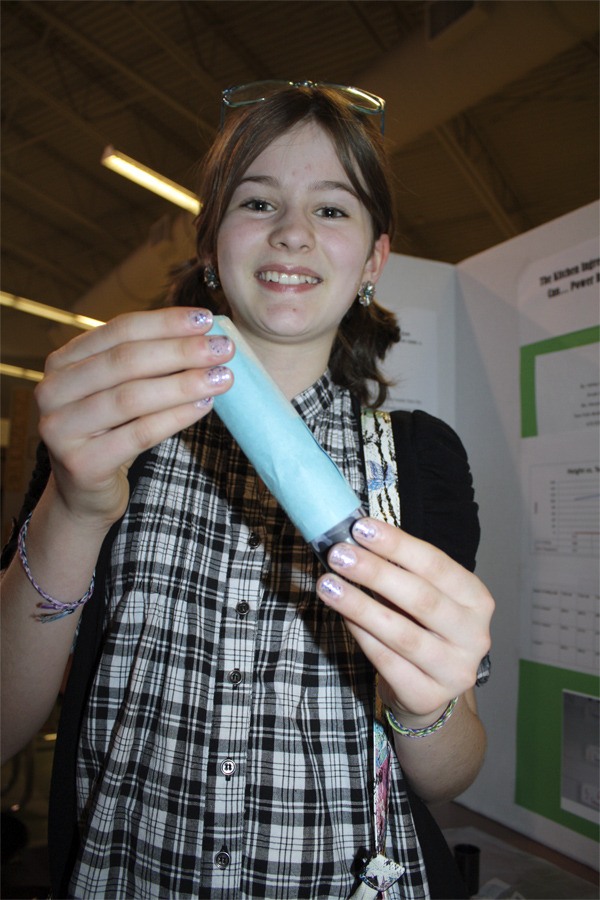
Valley elementary, middle and high school students explore bold frontiers, serious mysteries and weird wonders in annual science fairs.
The following are a sampling of the wide variety of projects to spring from their imaginations.

Deep freeze
As his friend Adam Rogers pulls on gloves to help, Twin Falls Middle Schooler Carlos Larios cheerfully dunks a chunk of super-cold dry ice into water, mist swirling around his station.
Carlos is having fun with the experiment, in which he proves that the warmer the water bath, the faster the dry ice—frozen carbon dioxide—evaporates.
“I’ve been curious about dry ice,” the seventh grader says. “Even if you hold it with gloves, it can still burn you.”
The dry ice experiment was among a number of serious and goofy topics at Twin Falls’ science fair on April 12, which ranged from dirty keyboards and homemade hovercrafts to DNA and smoking’s effects on the lungs.
“Science is an interesting thing,” Carlos says. “We get to learn how things grow and transform. It’s not always putting Mentos in Coke. It’s about learning how chemicals react to each other.

Zapped hair
A student has a hair-raising experience when she tries the ‘lightning machine’ at the Opstad Elementary School science fair March 22.
Opstad Elementary School continued its tradition of hands-on learning when 296 students, grades K-5 participated in the annual fair.
An estimated 1,000 in attendance viewed students formal science project presentations such as an exploration of whether dog nose-prints are as unique as human fingerprints, as well as trying their hand at some of the demonstrations. The OtterBots robotics display and 100,000 volt Van de Graaf “lightning machine” are always popular at the annual event that grows each year.
Science fair participants chose topics that were interesting to them, then formed the questions they wanted to explore, predicted the answers, tested their predictions, then reported on their projects. A group of 26 adult volunteers judged the projects during the day. Mount Si High School teacher Kyle Warren nominated 30 finalists for Super Scientist awards, and the judges also selected these award winners.
Judges scored projects according to age, based on how well students followed the scientific method, choice of topic, final display and presentation, and other factors.
The Opstad Science Fair has grown over the years, requiring a small army of volunteers to put on, and completely filling the school gym/lunch/stage room. The event is sponsored and led by the Opstad Parent Teacher Association (PTA), with committee chair Lori George again leading efforts this year, guided by a committee of community members.

Yoga vs. Television
A cultural showdown was at the heart of Carly Stewart’s science fair entry at Cedarcrest. The freshman wanted to compare the effects of two different activities, practicing yoga, and watching television, on people’s bodies.
“I took their blood pressure before and after yoga, and then before and after television, and I found that yoga significantly lowered their blood pressure, and television significantly increased their blood pressure,” she said.
Television was limited to the show “24,” but Stewart wanted to further investigate the effects of different types of television shows. For this experiment, the action show fit her purposes.
“When you’re watching television, you’re always thinking ‘what’s going to happen next?’ You’re trying to figure out the plot, and in yoga, you’re trying to focus on your breathing, and really relaxing,” she said. “I really wanted to see the overall difference between mental calmness and mental activity… I wanted to see if there’s an unspoken reason why many Americans have hypertension.”

Electric Shoes
He’s not a runner himself, but Cedarcrest High School junior Alex Ratayzeck laced up his own shoes and took a couple of jogs to prove his hypothesis: there are plenty of ways to produce electricity that have nothing to do with fossil fuels.
“The world uses 18 trillion kilowatts per year, and 77 percent of it is supplied by fossil fuel,” he said at the Cedarcrest science fair in February. His goal, with his electric shoes, was to lighten some of that load.
“Even if it just charges an iPod, that’s that much less electricity that is taken from the fossil fuels,” he said.
The shoes work, too. The left one is a Faraday device, modeled after a flashlight that is powered by shaking. The right one is piezoelectric, more intriguing to Ratayzeck, but less powerful.
“The Faraday one works very well. It actually generates quite a few volts,” he said. “The piezoelectric one produced a little less voltage than I wanted, but it still produced enough to be practical.”
Ratayzeck’s shoes earned him first place at the Central Sound Regional Science & Engineering Fair in March, but he’s gotten used to science success.
“Last year, I built an argon gas laser,” he said.

At the Twin Falls Middle School first science fair, cookie tasters Sydney and Nancy explored fellow students’ reaction to normal, sweet, sour and salty cookies.

Twin Falls MS sixth graders Anna Steenvoorde and Sydney Lee tested Abby the Boxer’s taste preferences, along with friends’ dogs.