THE NEW OLD
Published 11:27 am Thursday, October 2, 2008
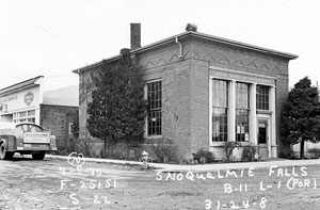
SNOQUALMIE – It’s been a bank, a town hall and a wreck.
Now the old City Hall building at Falls Avenue and River Street will once again be filled with bustling city workers.
Renovations to the historic building were recently completed and the city of Snoqualmie Planning Department will soon move into the new digs.
The move follows a meticulous restoration that included ordering window glass from France to match that of the original 1920s windows and a chemical procedure to distill the exact shades of paint used for the interior’s first coat.
The opening of the Snoqualmie Falls Lumber Co. mill in November of 1917 created a stronger economy in the area and led to the founding of the State Bank of Snoqualmie in 1919, though it was housed in other buildings around town until 1923. That’s when the 1,425-square-foot building, originally the State Bank of Snoqualmie, opened. The bank was eventually consolidated with other banks in Carnation, Duvall, North Bend and Issaquah into the Washington State Bank in 1943 and used as the banks’ headquarters. The bank withstood the Great Depression and saw an addition in the 1940s, a small wooden structure meant to be a boiler room (which later served as the mayor’s office when the bank closed). The building was purchased by Seafirst Bank in 1956, and conveyed to the city of Snoqualmie in 1976. It served various municipal purposes for 14 years, until a series of floods hit during the 1990s. In 2001, an earthquake threatened to separate the facade from the rest of the structure, among other severe damage.
Though there have been several attempts to fix up the building over the years, none of these efforts restored it to its original beauty as thoroughly as the project just completed.
Rhoda Lawrence, principal architect at BOLA Architecture and Planning in Seattle, said she and fellow architect Matt Hamel were lucky to have most of the original structure intact. They were able to use historic photos to find details, such as a railing along the mezzanine that was missing and needed to be found and put back in place.
About 98 percent of the exterior is original, Lawrence said. Builders just had to do a little patching using brick from one of the chimneys that was taken down. Inside, extensive plaster damage meant a lot of the old stuff had to be replaced. A dropped ceiling was taken out and a new one was built to the original height. The inside rooms remain in their original configuration.
The renovations came with a $300,000 price tag, which the city gleaned from its Federal Emergency Management Agency insurance. To preserve the restoration, the city insured the building against future earthquakes through Washington Cities Insurance Authority. The city is responsible for a $7,000 deductible, which is achieved primarily through in-kind services.
“The whole city of Snoqualmie is built on very poor soil,” said Lawrence, regarding the building’s reaction to the earthquake. “It has low bearing pressure. The building moved more than it was designed to move and didn’t have a safe foundation under it.”
But it does now, along with a steal frame that holds the front facade onto the main building.
“The front facade was peeling away from the rest of the building,” Lawrence said. “The most difficult aspect was trying to determine how best to support the front wall and do that in a concealed fashion working closely with an industrial engineer.”
The building also got a new fire proof and high wind resistant roof, and new gutters and downspouts. All were matched as best as they could be to historic photos.
In order to determine the original shades of paint that once colored the inside of the Colonial revival, paint seriations were performed. The process involves carefully scraping off different layers of paint to see what’s under each layer. The layer determined to be the first was color matched by a paint manufacturer. In addition, the vinyl flooring was pulled, a new rug was put in and a wheelchair accessible bathroom was installed. Wood paneling was removed from the old mayor’s office, which was then drywalled.
“I think the colors are what we believe to be the original and not what you’d expect – gold and green,” Lawrence said. “I think they’re beautiful, before it was pink. It’s a much higher quality now.”
There will be a ribbon cutting ceremony at the old City Hall at 5 p.m. on Monday, Jan. 24. The building will be open to the public.
Dave Battey contributed to this article.