‘Father’ of Snoqualmie Ridge retires
Published 3:27 pm Thursday, October 2, 2008
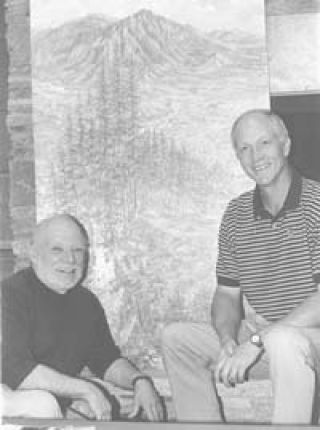
After 25 years with Weyerhaeuser, Jim Nyberg’s decided it’s time to
move on to other projects.
As with any “retirement,” he leaves with some regrets. On the other
hand, he takes great pride in being the person who took Snoqualmie Ridge
from inception through planning and on into the growing residential/business
development it is today.
Notably, the Spokane native says a career in forestry, real estate
and development was not high on his list of priorities when he graduated
from high school.
“I went to the University of Washington for a couple of years,”
Nyberg commented during a recent interview. “I got tired of being broke, so I
went into the Air Force. I was stationed at Keesler Air Force Base in Biloxi.
“After I got out, I got a job as a mechanic and spent one and a
half years working in a service station. It took me about a year to realize I
was just as broke as I was when I was in the Air Force.”
At that point, Nyberg said, he decided he wanted to try something
else. He returned to UW for studies as a forest engineer, which included an
internship with Weyerhaeuser.
“I worked a logging camp for three years,” he said. “Absolutely loved it.
I enjoyed working in the woods, but looking ahead ten years, I wanted
to do something more.”
He returned to school at the University of Santa Clara in
California, picked up a master’s degree in business, then came back to
Weyerhaeuser corporate headquarters, where he started working with the real
estate side of the company.
“The company had a graduate study program in Longview,” he
added with a smile. “I was kind of the D.B. Cooper of Weyerhaeuser. I was
the first person to ever sign up for that program.”
Moving up the corporate ladder, Nyberg said he held several
positions and several titles – ranging from project manager, to assistant
director, to assistant regional director – before the Snoqualmie Ridge project
came up.
In 1984, the real estate company purchased the property from the
parent organization and started looking at development. According to
Nyberg, about 1986 a decision was made to “do this differently.”
“We did a telephone survey,” he stated. “We called about 500
homes, and asked them 10 different questions. Should it be a piecemeal
development? What are the things the city needs to do? We were trying to get
a `pulse.’
“Then we’d hold meetings at the hospital – `Here are some ideas’ –
and take input. When we submitted the petition for annexation to the city,
I think that’s when I fell in love with this city. I thought, `what a great
town, what great people.'”
Nyberg also recalls the opposition, which was strong and strident
from several quarters, but feels, “that’s
fine. You build consensus and things improve. Your ideas, other ideas, you
get a plan.”
As the project moved along, Nyberg said it became a lighting
rod for development, attracting attention not only from land use and
interest groups, but also the media.
“The P-I and the Times were relentless,” he said. “It got to the
point where I wasn’t answering the phone. There was an atitude
towards Snoqualmie from King County – a lot of folks and the media – `you’re a
small town, you don’t know what you’re dealing with.'”
The primary group fighting the development was the Friends
of Snoqualmie, which fought the development through the King
County Boundary Review Board all the way to the state Supreme
Court. Snoqualmie Ridge ultimately triumphed, but it took two and one
half years, along with four years to get the annexation.
“We refreshed the plan and in September 1996 the city approved
the mixed-use plan,” Nyberg recalled.
“In late 1996 we started construction.”
On the plus side, Nyberg gives much of the credit to two groups:
the Snoqualmie Steering Committee, formed by George Swenson, and
the mayor and administration of the city itself.
“The project went through an ungodly amount of hearings,” he
stated. “Every time we had a hearing, they (the steering committee) would
show up, anywhere from 30 to 80 people. It’s something I’ve never seen in
the land use hearing process.
“I remember the EIS (Environmental Impact Statement)
hearings going Monday through Friday, 7 to midnight. But they got better as
they went along.
“The city staff was very bright, very capable and methodical,”
Nyberg added. “A goal we had, and the city too, was to do this as quickly as
possible. My idea was, the city and staff needed incentive, and the
incentive was information.
“For example, if someone came in and said, `there are bald eagles
up there,’ I’d say, `fine, let’s study it.’ By the way, I have never seen bald
eagles up there.”
Nyberg feels the city has grown with the project, and it is
becoming something the city can be proud of. He rates the consensus building
process that Weyerhaeuser and Snoqualmie engaged in as one of
the highlights of the whole procedure, adding, `that’s where working with
the city of Snoqualmie has been really good.”
“I think the neat thing about the city is that once we were aligned,
everyone worked together. That’s been refreshing.”
But now, with houses and industry sprouting on the hilltop, it’s
time to move on. Nyberg says it’s like raising a kid: now’s the time to send
him or her off to college.
“All of the agreements are in place, the golf course and clubhouse are
finished, and we’re working towards the second phase,” he said. “And
I thought, okay, it’s time to move on to new challenges.
“It’s a legacy. You have a soft spot in your heart for it. You’d like to
stay involved and guide it, but you have to step back.”
He officially retires from Weyerhaeuser on Oct. 1, but has
no plans to really “retire.”
“I’m still too young not to be doing something,” Nyberg
announced. “I’ll look at other opportunities in
the real estate field, but I’m open to just about anything. I’d like to stay in
the area; I have a son who has about five years to finish school and he likes
the area.
“I think the important thing is this project is healthy and it’s off
the ground. I think Snoqualmie’s going to grow into one of the finest places
in the county to live, because they’re looking long term and planning
carefully.”
When asked if he was truly the “father of Snoqualmie Ridge,”
Nyberg smiled and shook his head.
“Yeah, I’m probably the guy that helped it go through. I’ve had 25
great years; working for Weyerhaeuser was easy, and they always stood by
their commitments.”
“I never lost face in this city.”