Changes coming to North Bend
Published 2:59 pm Thursday, October 2, 2008
NORTH BEND _ People coming down off the western slope of the
Cascades along Interstate 90 usually make a bee line for the first available
center of civilization, i.e., gas, food and possibly a rest stop. Some make the
stop at Exit 38, while others decide to hang on till Exit 34.
Their mission completed, they oftentimes pull back onto the
interstate, possibly pausing long enough to gaze at magnificent Mount Si.
Some undoubtedly look up Bendigo Boulevard and think, “Gee, I wonder
what’s up that way?” and then proceed on their way.
According to Sara Barry, Special Products Coordinator for the city
of North Bend, that could all change. What the casual visitor sees now is
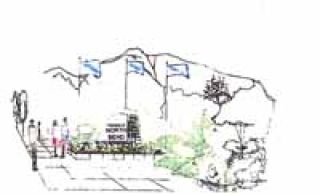
a stretch of road disappearing between some trees. Soon, however, within
a couple of years visitors might take in bright banners, artwork and other
design features. That might just prove to be the ticket to lure them into
downtown for a look-see.
Enhancements of the corridor are an outgrowth of several previous
city projects, including 1995’s North Bend Vision and Comprehensive Plans
and the city’s Six-Year Transportation Improvement Plan, adopted in
July 1998. The goals were simple: to develop an attractive, inviting entry
into historic downtown North Bend.
Working with a consultant, a planning committee met four times
between May and October 1999 and looked at several ideas, including
bike lanes; introduction of roundabouts or traffic rotaries; improvements to
pedestrian walkways, landscaping and lighting; installation of banners,
island planters and small plazas; and a public art program similar to programs
in cities like Wenatchee and Raymond.
The plan approved by council incorporates several of these ideas,
but now comes the hard part, according to Barry: finding the funding
for implementation. The city provided $51,000 from its 2000 budget to
help with several aspects of the program, but the remainder will have to
come from grants and donations.
The public art program _ of which Mayor Joan Simpson is a strong
proponent _ will require the formation of an arts commission.
Using Wenatchee’s program as a model, the group will direct a partnership
between the city, private sector and local artists leading to the
emplacement of display art on pedestals at several locations. The public will vote on
its favorites and the city will acquire one piece of art on a yearly basis.
“I am a big supporter of the arts program,” said Mayor Simpson.
“Public art is very controversial and everyone has a strong opinion, so I
think the best approach is to let the public vote on what they want to see.
“In my opinion, involving the public in the decision making process
is the right thing to do.”
Simpson pointed out the city is also continuing efforts to
enhance downtown, including a façade restoration program which is unique
among small cities in Washington. Through this program, the city provides
financial aid to building owners who wish to restore the exteriors of their
structures.
Management Assistant Michelle Finnegan-Green coordinates the
program, which is financed through the downtown revitalization
fund. Through it, owners receive financial and architectural assistance
leading towards the restoration of their building exteriors.
Recent examples include the Masonic Lodge _ now occupied by
D&M Auto Parts _ the Iron Age building and the North Bend Theater. In the
latter instance, the city allocated $6,000 towards the purchase of the
theater’s historically accurate reproduction neon sign.
“We will assist the property owner if they agree it’s toward historic
preservation,” Finnegan-Green said. “Typically, what we do is hire a
consulting architect who works in two phases. First they take a look at
the structure, do a conceptual drawing and develop a budget. Then, if the
property owner approves, the city pays for the construction drawings.”
Right now the city is considering assistance towards the restoration of
the North Bend Tavern building, she added. North Bend will next
assist with work on the McGrath Hotel building.
“That will probably be a hybrid project like the theater,”
Finnegan-Green commented, “because the exterior is intact.
“This works well for all and fits in with the heritage corridor project.
One of the goals is to get people downtown. This program will help give
people something to look at.”
“We’ve achieved state recognition in this program and have won
state awards,” said Simpson. “It’s a
very innovative project. I don’t think there is anyone in the state who has
done this work to this extent.”