
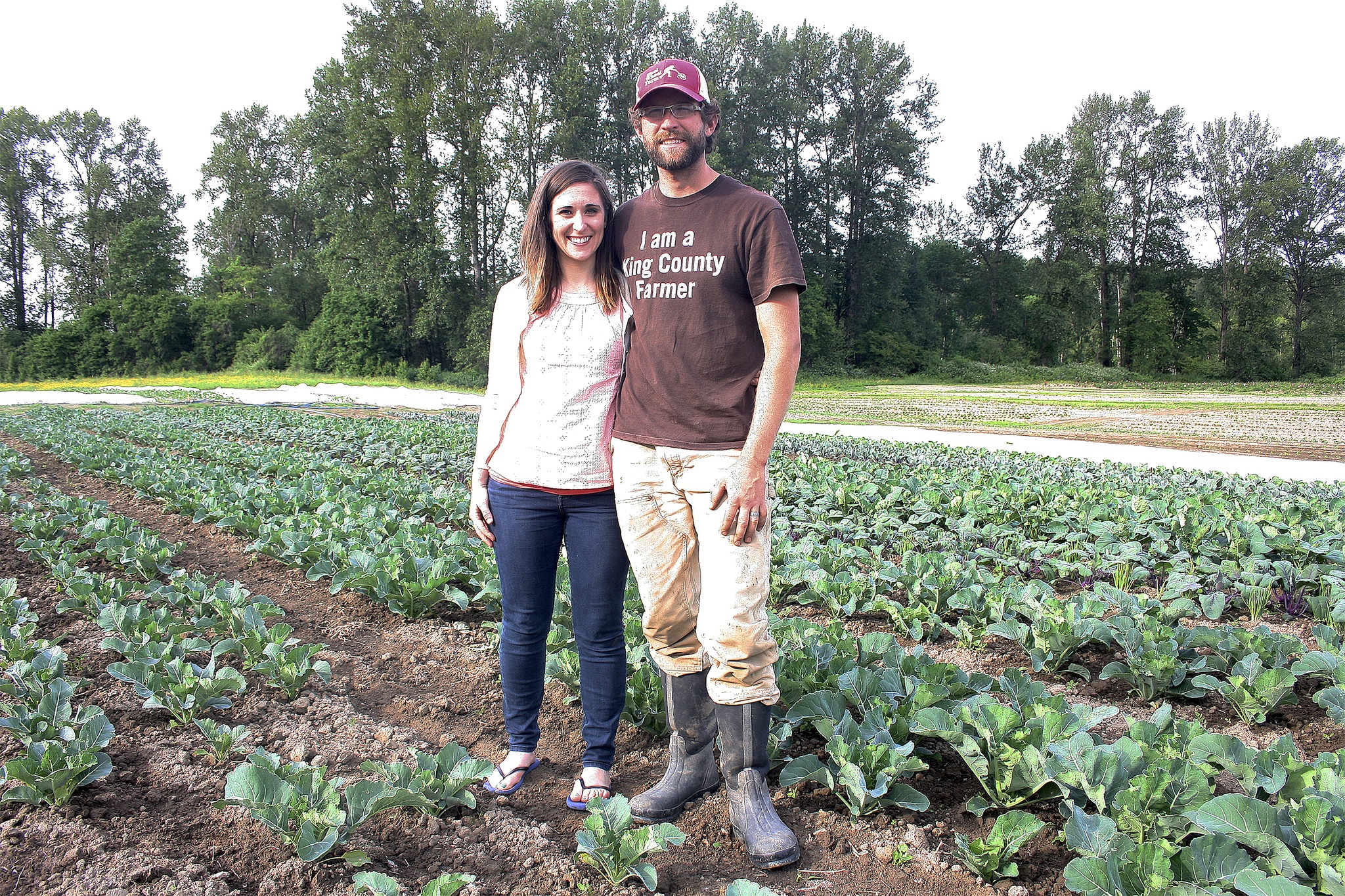
The day starts early for first-generation farmers Ryan and Kim Lichttenegger. At 5 a.m. the couple’s alarms go off at their Issaquah home, and they begin preparing for their day. Kim goes to Seattle for her job with the Chamber of Commerce, Ryan heads to Steel Wheel Farm in Fall City.
After breaking into the industry five years ago, the couple’s one-acre farm has grown to eight, all of which are leased on two fields in the pristine Snoqualmie Valley. Both are 33 years old, which when taken with their first-generation farming status, bucks the stereotype of older, corporate farmers.
Kim said since they started in 2010, they’ve seen more and more young farmers taking up small-scale, natural and community-based farming.
“That in itself is very rewarding, it’s being able to bring home vegetables and make food,” she said.
Steel Wheel Farm participates in a program known as community sustained agriculture, where locals subscribe to the farm for regular food deliveries. They also ship more than 50 varieties of vegetables to a dozen restaurants and a few farmers markets. Their stock ranges from kale, lettuce greens and chard to cauliflower, tomatoes and herbs, all grown under Certified Naturally Grown regulations which is a community-based peer review system where farmers verify other farmers are growing without synthetic herbicides, pesticides and fertilizers or genetically modified crops.
“Nobody wants to deal with the chemicals and synthetic fertilizers,” Ryan said.
The farm also offers meat once a year from rotating livestock they raise, as well as eggs from their own chickens. Bees on their farm provide honey which they also sell.
This diversity is crucial for small farms, Ryan said, allowing them to cater to and supply produce in a world of constantly changing vegetable trends.
For example, he said, kale used to be a hot commodity, followed by chard, both of which have cooled recently as “purple things,” as Ryan put it, have grown in popularity this year.
The harvest cycle also lets the couple try and keep up with changing food fads, letting them take a guess at the year’s direction early in the growing season.
“The nice thing about farming, good and bad, is that you get to restart at the beginning of the year,” Kim said.
Farming was a natural choice for Ryan, who moved to Washington State from Minnesota, where he grew up next to a dairy farmer. He and Kim met in passing when they both attended Woodinville High School. He later worked for a few years at Jubilee Farm in Carnation before deciding to set off on his own with Kim and they bought a one-acre farm, making their farmer’s market debut in 2010.
Kim handles the bookkeeping and social media outreach while Ryan handles the majority of the day-to-day operations of the farm.
“It’s like any business, it’s constant work,” he said, with one notable exception. “You have to deal with Mother Nature.”
Steel Wheel Farm produce can also be found at Capri Cellars in Issaquah, La Medusa and Cafe Flora in Seattle and the Eastside.

