State tries to prevent outbreak of fine
Published 2:39 pm Thursday, October 2, 2008
NORTH BEND _ Thousands of acres of Washington land have
been blackened by this summer’s plague of fire, and while the western half of
the state has so far avoided the threat, officials warn only one lightning
strike or discarded cigarette butt is needed to set forests ablaze.
In what is being called the worst fire season in 50 years, dry
weather has created favorable conditions to ignite fires. Across the western
United States, fire crews struggle to control forest fires, and firefighters have
been called out several times to battle burns in Eastern Washington.
West of the Cascades, Gary Castellane, south zone fire
management officer for the Mount Baker-Snoqualmie National Forest
districts of Enumclaw, North Bend and Skykomish, is kept busy
organizing firefighting crews who stand ready to assist with any new blaze ignited.
He said media attention focused on this summer’s series of fires, like the
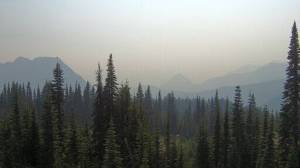
current one engulfing the Bitterroot Mountains of Montana, has
helped make people aware of fire dangers as they recreate or camp in the forest.
Those people are also often the first ones to spot a fire before it’s
out of control.
“The public reports probably 80 percent of the fires we
have,” Castellane said. “The public, by
and large, has really helped us out.”
Of the fires that have dotted Washington, Castellane said the
majority were started by lightning.
“These little, small cold fronts come over and generate
lightning when they go over the mountains,”
he said.
Maggie Querciagrossa, a meteorologist with the National Oceanic
and Atmospheric Administration (NOAA) in Seattle, said the fires have
been helped by two factors: a prolonged drought east of the Cascade
Mountains and west of the Mississippi River valley, and a high-pressure system that
is normally located along the Atlantic seaboard that is now stationed over
the Midwest and Southwest. The short-term outlook for rain isn’t good,
she added.
“The near future is dry,” she said.
Castellane said even if the summer weather starts to cool down, the
threat might not be over.
“If it starts freezing in the high country, it just dries (the forests)
out even more,” he said.
That could pose a major problem because the water content of dead
trees in the Cascades is already lower than normal. Querciagrossa said for
the central Cascades, the water content of dead trees is 16 percent, compared
to a normal measure of 22 percent.
For the northern Cascade Mountains, water content is 15 percent,
compared to 20 percent normally, and trees in the southern portion of the
mountain range have an average of 15 percent water content, compared to a
normal reading of 17 percent.
“When things get down less than 19 or 18 (percent), then it starts
getting pretty worrisome,” she said.
The state Department of Natural Resources has issued an open burn ban
(excluding campfires in approved metal- or concrete-line fire pits and
at designated campgrounds) for all state forests and DNR-protected land.
And on Aug. 11, Gov. Gary Locke instituted a statewide ban on all types
of outdoor and agricultural burning because of a lack of resources to
fight fires.
“State fire experts caution us that sparks and ashes from any kind of
fire can be carried by air currents to another location,” Locke said in a
statement. “Right now, it’s not only possible, but likely, that a fire would
start as a result of such burning.”
On Aug. 8, the governor declared a state of emergency in
Washington and called up 500 National Guard members to start a three-day
training exercise in fighting fires at the Yakima Fire Center.
At the time of the announcement, Commissioner of Public Lands,
Jennifer Belcher, said the state lacked the manpower to fight a major fire.
“If we have a major fire incident, Washington could face multiple
(fire) starts,” she said. “We would have
no additional resources to assign within the first 24 hours. Planning ahead
for a possible shortage is the right step. We owe it to our firefighters,
Washington citizens and other natural resources.”
Castellane said he, too, is feeling the affects of this summer’s
outbreak of fire.
“We’re ready to go where the fires are, and that sometimes stretches us
a little thin back at the home district,” he said. However, he is
confident enough people are on hand to protect the North Bend, Enumclaw
and Skykomish districts.
He said individuals can do their part by following a few, simple
rules while on state and federal lands: Smoke only along roads or while
inside the vehicle; don’t drive cars onto grassy areas because heat from the
car could start a fire; and report any fire as soon as possible.
The fire management officer also said U.S. Forest Service personnel
are patrolling the forests, making sure everyone follows the burn bans.
“We have a presence out there to make sure that the public is safe,”
he said.