Puppies in green mean business
Published 2:57 pm Thursday, October 2, 2008
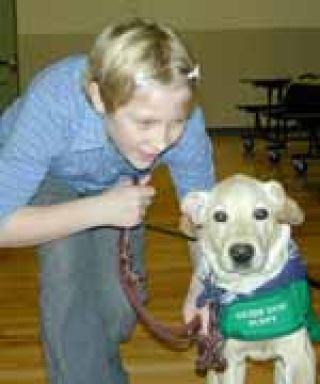
When these four-legged friends are “naked” they can be playful little pups, but once they put on
their green work coats, it’s back to business. They are puppies-in-training
and when they grow up, all they want to become are guide dogs for the blind.
Before they can get there, however, they must first learn their puppy
manners. That’s where families like the Starkies and Shorrs, along with half
a dozen others in the Valley, enter the picture as puppy raisers.
The families’ main duty is to socialize the young pup, teach them
the basic obedience skills and expose them to different modes of
transportation, said first-time raiser June Starkie.
“We really try hard to make them successful because we want them
to be good,” she said.
Three-month-old Winter Shorr and 4-month-old Rizzo Starkie, both
yellow labs, came to the Valley through Guide Dogs for the Blind, which
has facilities in California and Oregon. The Starkies and Shorrs are part of
the 4-H Club “For Your Eyes Only,” which specializes in matching raisers
with the soon-to-be working dogs.
“All the families that join up with the club enjoy raising dogs,
having endless puppies and like to really help others,” said group leader
Windy Jones. “With our program, our job is to help the individual raise these
dogs. We don’t dump these dogs on you and say, `Here’s yours.'”
The surrogate parents and pups devote many hours to training,
grooming and socializing. Weekly and yearly events help the raisers swap ideas
and learn effective training techniques to use on their furry bundles of joy.
But all work and no play make Winter and Rizzo dull dogs, so
the families make sure that they also give them a lot of love and fun.
“I have a friend that’s blind and when she takes the harness off
he’ll run around and get his toys,” said 13-year-old Rickie Shorr. “But when
his harness is on, he’ll stand so proud.”
Several problems that puppy raisers consistently face are
convincing some wary business owners to allow their pup into the store and the
ever-present barrage from “Pushy petters.”
“When we say, `No’ we’re not being mean, she’s just in training,”
explained veteran raiser Lori Shorr, who is raising a puppy with her son
Rickie. “But when the kids are 8 years old, they don’t know what `training’ is.”
During this phase, the raiser has the interesting task of exposing
the pup to new environments while keeping their ever-sniffing canine
focused. Therefore, it’s always best to ask a puppy raiser whether it’s OK to
pet the dog while they’re in training.
By the time the dogs are handed back to the training center, they
should have mastered 10 commands: sit, down, stand, let’s go, come, stay,
wait, off, kennel, that’s enough, good dog and do your business.
Then the dog will spend another six months in specialized training
to learn to become a guide dog for the blind; however, not all of the
canines will graduate. Sometimes the animal can’t perform the duties necessary
so they can either go into other fields such as police work or be returned to
their puppy raiser.
And finally, the answer to the million dollar question on
everybody’s mind — yes, raisers can say
goodbye to the puppy at the end of the term.
“Everybody goes into this with the idea that this puppy actually
belongs to Guide Dogs for the Blind and that the dog will be going back and
you get another dog immediately,” Jones said. “So you’re giving up your
pride and joy and get another fuzzy puppy to start again with.”
“It’s hard to give them up, but the rewards when the guide dogs make
it outweigh all of that,” he added.
Lori Shorr, who raised Nicklaus before getting Winter, admitted that
on the day they needed to give up the pup she cried all the way to the facility
in Oregon. But her sadness soon turned to pride when she saw the
potential that her puppy might achieve at the academy.
“I met a blind person who had a Seeing Eye Dog and now I’ll do it
a million times,” she said. “The only way I can do it is to know this
dog will be loved to the end.”
The Starkie girls agreed that they too will be happy when they see
their puppy become a full-fledged working dog.
“I don’t think I’ll feel sad,” Bronwyn Starkie said. “I know I
did something good.”
“I’d be sad but happy too,” added Elizabeth Starkie. “They’re going
to someplace good.”
For more information about Guide Dogs for the Blind or becoming
a puppy raiser, call Coordinator Michele Cawley at (800) 689-0686 or visit
the group’s Web site at www.guidedogs.com. Or, drop by
the For Your Eyes Only meetings on Sundays at 4:30 p.m. at The Little
School in Bellevue.
<