Snoqualmie Valley Hospital’s construction of new Ridge home on fast track
Published 2:17 pm Tuesday, July 26, 2011
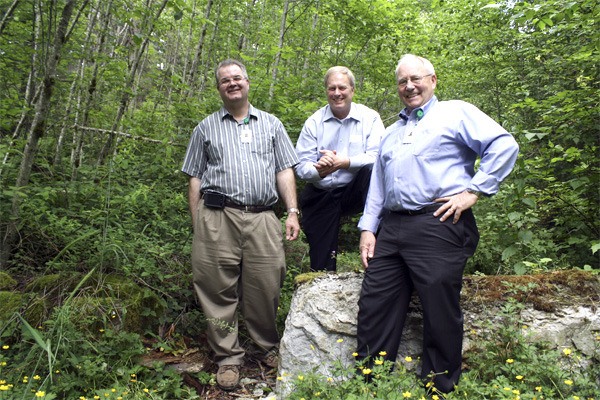
Jim Grafton wished he’d brought his boots in the early visits to Snoqualmie Valley Hospital’s new home.
Grafton explored every corner of this gentle hillside, a green, muddy landscape of trees, ferns and campfire ashes, seeing for himself how the place fit into the King County Hospital District’s vision for the future.
As capital projects manager for King County Hospital District No. 4, Grafton has been at the heart of the hospital’s search for a new home over the last five years. Long moving at a crawl, that project—to build a bigger, modern facility closer to the interstate highway—entered high speed when the district identified a prospective new home on timberland once slated for housing on Snoqualmie Ridge.
Snoqualmie Valley Hospital is moving forward quickly this summer with plans to build in a new location near the Snoqualmie Parkway connection with Interstate 90. Clearing and grading began this week on a nine-acre parcel north of 96th Avenue on the very edge of city limits, land formerly slated for home development not far from Echo Glen Children’s Center.
“We expect to keep a great deal of this,” said Grafton, eyeing the groves and berry bushes around him that may end up providing scenic views to future doctors and patients.
Construction, which follows a lease-leaseback agreement with a developer, is expected to start this winter with completion envisioned for 2013.
Big plans
A new $30 million, 60,000-square-foot facility would more than double the existing footprint of the current Snoqualmie hospital, which dates to 1983.
Construction will allow for full occupancy of the hospital’s 25 beds and better access and service to outpatients, Hospital Administrator Rodger McCollum said.
“This is all designed around family-friendly, large rooms, which are single occupancy, the standard of care,” he said.
The building will also include expanded rehabilitation services and laboratories, a bigger emergency room and a pharmacy.
“We’re not changing anything that we’re doing, we’re just going to have more room to do it with,” McCollum said.
To him, the project will help make a real difference in patients’ lives.
“Hundreds of people are alive today because we’re in the community,” McCollum said.
“How many people still drive the car they were driving 30 years ago?” added Fritz Ribary, the hospital’s Manager of Marketing and Communications.
Commissioners voted five years ago to build a new facility closer to I-90, hoping to gain the accessibility and visibility that was lost at the Meadowbrook site. The district’s first attempt, developing a site across the parkway on private property that included the former Leisure Time camp, fell through in 2008 when the King County Council declined to alter its comprehensive plan in favor of the development.
A second vision, to build atop Snoqualmie Ridge, evolved into the new proposal following conversations between hospital officials and counterparts in the city over future Ridge development.
Following a request for proposal process, commissioners in June selected Moreland Corporation as developer, Soderstrom Architects and Abscher Construction Co., as contractor.
McCollum said the hospital’s designation as a rural Medicare Critical Access hospital will mean federal reimbursement for much of the cost of construction. The hospital is issuing a $5 million non-voted bond as a cushion, and is pursuing non-profit designation for the project as a way to defer taxes on the financing.
The Snoqualmie Tribe continues to make monthly payments for the current hospital, which is slated to become a tribal health center. The Tribe bought the existing hospital complex for $30 million. The district still retains the Leisure Time land on the other side of Snoqualmie Parkway.
“That’s our future,” McCollum said. “If growth happens, we have property across the street for a hundred-bed hospital.”
• The Snoqualmie Valley Hospital’s website is www.snoqualmiehospital.org