Boeing Classic hosts clinic to help disabled golfers
Published 8:30 am Wednesday, August 31, 2016
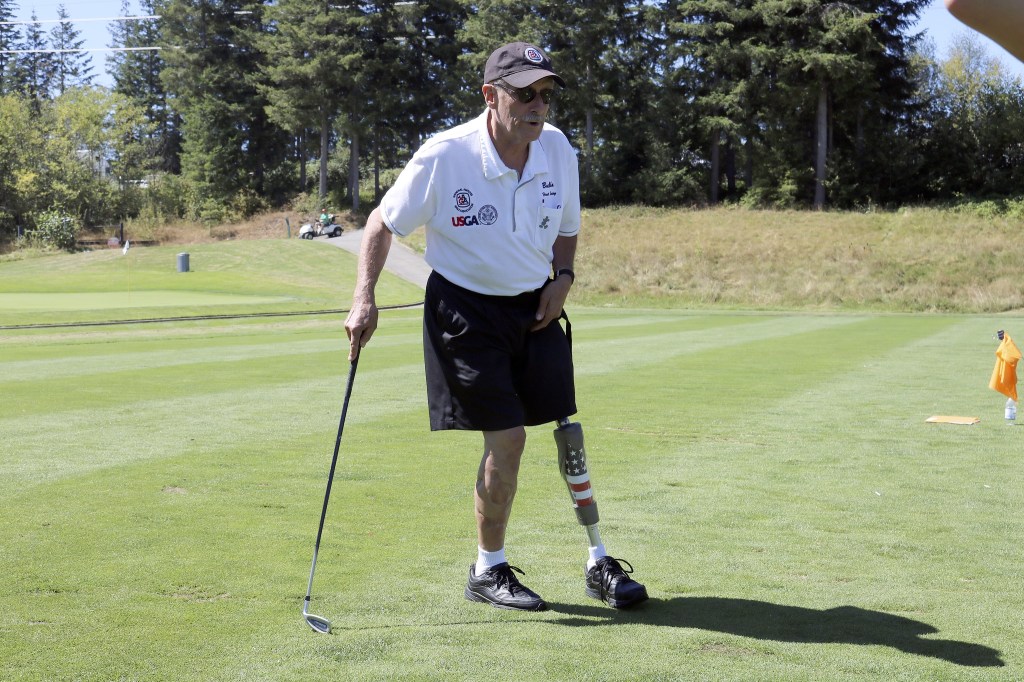
Learning to swing a golf club in a whole new way was the goal of the Boeing Classic’s adaptive clinic, a day long program designed to help disabled golfers develop new methods to swing a golf club and become more physically active.
The Boeing Classic and Virginia Mason Medical Center hosted the event on Tuesday, Aug. 23, at the Snoqualmie TPC driving range. Barbara Bond-Howard, organizer of the event and recreational therapist at Virginia Mason, started the clinic seven years ago.
“I had been a volunteer out here and I said we should bring more awareness of disabled golf to the PGA tournament,” Bond-Howard said. “So from the first year on we have had 25 to 30 people out here doing this. I started from a piece of paper and it’s very exciting to see this come out.”
Bob Tipton, disabled golf clinician with the National Amputee Golf Association, instructed the disabled golfers at the event. An amputee himself, Tipton helped teach balance and body movement to golfers who had lost limbs, suffered from a stroke, or were paralyzed.
“Golf in particular is nice because you can do just as much as your body can tolerate and stop any time you want to rest,” he said. “It’s been a real boon for the people who need a challenge that is not too intimidating. We’ve had patients who have had total hip replacements, total knee replacements, back surgeries, neck surgeries, so you work within their limits.”
In addition to therapists and golf instructors helping out with motion and technique, the adaptive clinic also featured some technological enhancements to get more people up and swinging. The event featured two adaptive golf carts that let people with disabilities strap in and stand up to swing the golf club. The seat rose and lowered to adjust to the height and arm range of the person in the seat.
Tipton said golf carts are becoming so sophisticated now that they are able to get people swinging a club who normally would not be able to. Resources like the adaptive golf cart are helping therapists get almost anyone ready to play golf.
“All disabilities, whether… a stroke, amputees for one leg, both legs, one arm, both arms, we rigged them up with adaptive equipment to hold a golf club and get a good swing through,” Tipton said. “Usually, if they show up, I can get them swinging. I’ll promise you I’ll get them swinging.”
Tipton had to relearn how to be physically active after he lost his left leg during the Vietnam War in 1967.
“I was there ’66 and ’67. I did two tours in ‘Nam, was hit in an ambush and lost my left leg above the knee and spent a year in the hospital and when I got out I said I’m going to become a therapist,” he said. “I became a physical therapist and worked for 26 years at Good Samaritan Hospital in San Jose, Calif. I retired a few years ago and stepped right into this as a natural progression of someone who wants to be physically active.”
Lonny Meadows, tournament director of the Western Amputee Golf Association, was at the event practicing his swing and getting tips from golf instructor Marcus King. This was his seventh time.
After losing his leg in 2004, he felt as though he had forgotten how to play golf, but after adapting to his body, he found a way to continue.
“I started playing golf and then I lost my left leg and when I went back I didn’t know how to play,” Meadows said. “I learned to play with the leg off. These guys just really helped me. I learn something every time I come down and it just really helps me out.”
Tipton is proud of the work the clinic has accomplished and happy it promotes physical activity in the face of adversity.
“They are not sequestered away in a bed. The bed is not your friend. They are out in the sunshine with other people that have like minds, physical activity-wise,” he said. “We get feedback… and they say this is the best thing to ever happen to them, it’s really changed attitudes.”