Game of tags: Vandals target public property as fast as state can cover it up
Published 3:51 pm Wednesday, July 1, 2015
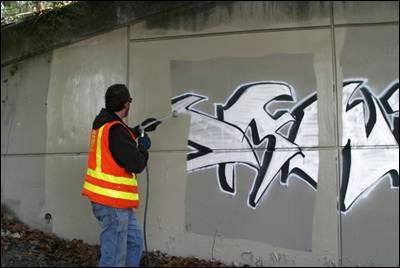
What takes almost a month to happen in North Bend happens almost daily in Seattle. That’s probably no surprise, but the same is true for Renton, Everett and Auburn — it can happen overnight in areas in each of these cities.
It’s graffiti, specifically, graffiti that lands on freshly painted abutments, walls or any other surface that is visible to the public, plus some that aren’t.
“It’s on the bridges, it’s on anything that’s concrete, it’s on the signs,” said Brian, who asked to omit his last name, both out of concern for reprisals and because he’d admitted to doing something illegal, technically.
The North Bend man is unlikely to get arrested for painting over offensive graffiti on an overpass on the Snoqualmie Valley Trail as he did about a month ago, but the letter of the law dictates that he was trespassing on state property when he did it.
“People can be cited for trespassing,” said Harmony Weinberg, spokesperson for the Washington Department of Transportation, which owns the overpass. Just like the vandals who put the graffiti there in the first place, well-intentioned people like Brian are crossing a line, onto private property, even if they’re trying to help.
“We don’t want average citizens out there, because it’s just not safe,” explained Weinberg.
Neither is the graffiti itself, she adds, because it can be a distraction to drivers. So WSDOT has a small staff of Bridge Tenders, four full-time staffers who go out at least twice a week to paint over graffiti.
“They’ll get to it within two days,” said Weinberg, and sooner if it’s “offensive or disturbing to the traveling public… It’s pretty much a rare day that they’re out doing their work and have nothing to clean up.”
Most of the cleanup happens in the areas that produce the complaints, the bigger cities in our corridor, south to Pierce County and north to the Canadian border. Smaller cities, like those in the Valley, don’t generate a lot of reports.
“We mainly see graffiti on the I-5 corridor between Renton and Seattle,” said Weinberg, with a couple of “hot spots” near Auburn and Everett.
Brian, though, sees graffiti throughout the Valley.
“I didn’t think DOT even came out for (graffiti),” he said, since he’s been complaining about it for two years. He finds tags on most of his running routes, especially on the less-public sides of some structures. He said he has contacted various law enforcement agencies and city officials, as well as WSDOT.
Most of the complaints WSDOT receives come through its online graffiti reporting system, Weinberg said, adding that she was surprised that Brian had not seen any kind of response. He didn’t know about the website (www.wsdot.wa.gov/Northwest/ReportGraffiti.htm) until after he had done his own, only partly successful cleanup of the overpass.
“Kind of difficult to match the correct color of a concrete wall… but at least it’s covered,” he wrote in an e-mail message with before-and-after photos of a white-splotched concrete wall.
Finding paint to match is not a problem for WSDOT, but mismatched paint is actually one of the organization’s big concerns with people doing their own cleanup.
“Driver safety is the number-one thing,” Weinberg said, “and if you’re seeing something that’s not normally there, you’re going to look at it.”
Their reasons may differ but Brian and Weinberg definitely agree on the need to cover up graffiti.
“It’s an eyesore,” said Brian. “If you let it continue, it will just expand.” And if it’s a sign of gang activity, which he wonders about, but doesn’t really know, he says, “it needs to be nipped in the bud.”
Brian added that he rarely sees suspicious people in the areas that he finds graffiti, and “I don’t really think it’s the homeless people that are doing this.”
Many Valley cities have struggled with graffiti problems in recent years, but there is little evidence that past tagging incidents have been gang-related. North Bend and Snoqualmie have both experiences a few sprees of graffiti, mostly attributed to teens. In 2012, North Bend established code to declare graffiti a public nuisance and require all instances of it to be covered up within 48 hours.
Two years ago, Fall City experienced a rash of tagging that covered public and private property and at least one car. The incident sparked discussions about gang activity in the community and proposals to create more murals, which are rarely tagged. The King County Sheriff’s office later arrested a Fall City teen in connection with at least 15 of the incidents, and determined that his tags were not signs of gang activity, but signs of how easy it is for someone to look up gang signs online.
Weinberg did not comment on the possibility of graffiti being gang-related, but re-emphasized the safety issues associated with graffiti, and with covering it up.
“It’s our job to maintain our structures and keep them in the best condition that we can,” she said. “For instance, some of these people who like to put graffiti on state structures are (tagging in) places we would never send our workers in … without a harness.”

A North Bend man attempted to cover up some of the graffiti that concerned him along the Snoqualmie Valley Trail. The tags included possible gang signs and “there were a couple of F-bombs in there, too,” he said. Not all of it was concerning, he said, like a heart symbol, so he left that as it was.

Damage caused in the Snoqualmie Community Park restrooms by a group of teens in 2012.