Seeing green: ?Students given tools to build a better Washington
Published 6:31 pm Tuesday, March 24, 2015
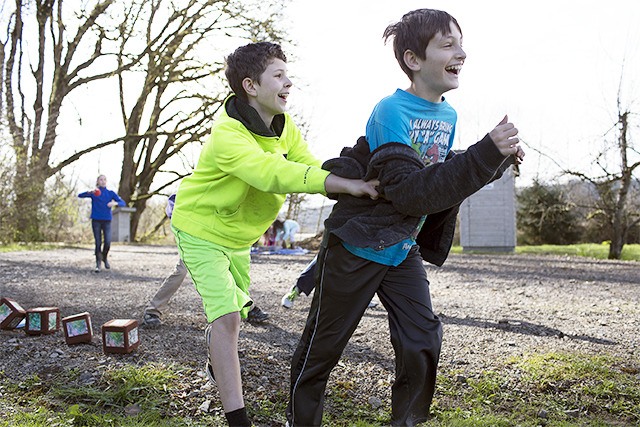
At 11 a.m. on Wednesday, March 18, the Snoqualmie Elementary School fifth-grade classes were in an unlikely place. Instead of hunkering down at their desks, they were huddled close to the ground at Oxbow Farms in Carnation.
“I think it’s a leech!” one of Danette Hruska’s students exclaimed about a specimen in a neon, ominous looking plastic container, as they combed the marshy farmlands during a wetland study at the 25-acre vegetable farm.
It’s a stark comparison to a traditional learning environment — if the student had found the leech prowling around his fifth-grade classroom, his tone might have been different.
“I’ve been trying to make the classroom come alive by taking the kids to do hands-on science outside,” Hruska explained. “It’s just really important to me that they can take those concepts and apply them outside to the real world and extend their thinking.”
Hruska has trekked outside with her students for the last eight years to study stream quality, stream bank restoration, the wetlands and forest ecology. She said her nature-based program is growing, and this year marked the first collaboration with Mount Si High School’s AP biology and environmental science classes, where they’ll work on upkeep of the wetlands behind their school.
“At least, for our students here,” she continued about the program, “it corresponds to the units that we do in the classroom. So, we study geology and how erosion and deposition affect the changing surface of the land, and so this helps kind of bring it full circle.”
This is the school’s first year partnering with Nature Vision and visiting Oxbow, as they’ve worked with Mountains to Sound Greenway and Toole Farm in the past.
Nature Vision is a Woodinville-based, non-profit environmental education program that travels throughout King and Snohomish Counties and works with kids inside and outside of the classroom.
Kelly Wohlwend, a Washington-state native, has worked with Nature Vision since October 2013. As she cleaned up after an educational water-cycle game, she explained the draw of outdoor teaching.
“It’s really important for (kids) to understand the place they live in so they can take care of it, because they are the people who are going to be responsible for the health of our environment in the future.
“Once they put a plant in the ground, they have ownership of it. That’s why when kids have their own gardens, it shows them how they can plant things and how they grow and I think it gives them some kind of connection they would miss out on otherwise.”
One of these fifth-grade future hopefuls from Cynthia Hodgins’s visting class was Shira Shecter, 11, and she seemed to thrive from the outdoor adventure.
After a lengthy safety introduction, Hodgins and her classmates planted small native plants to provide habitat, food and prevent soil erosion. While some of her classmates were slowly dragging worms from the ground, she was running a relay with shrub potters.
Her enthusiasm isn’t surprising as she said the forest was her favorite part of Oxbow. She listed science as one of her favorite subjects, besides reading and art.
When asked why a study like this was important, she quipped, “so that you can figure out how to protect it.”
Her curt response seems to prove the theory that some things are best studied outside of the classroom.

Zoe Perkins, 10, and Abigail Vanvleet, 11, plant ocean spray with their classmates during Cynthia Hodgins’s class at Oxbow Farm.