The Game of Life
Published 9:25 pm Thursday, October 2, 2008
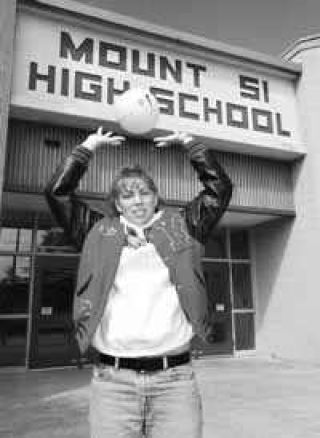
FALL CITY – Kristen Everett is no ordinary teen-ager. In fact, she is lucky to be here today, playing volleyball for Mount Si High School and her developmental Olympic-club team, the South End Juniors.
She recently returned from the annual Volleyball Festival in Davis, Calif., where she was one of nine girls being scouted by Olympic volleyball team coaches, looking to fill a recently vacated setter spot on the team.
Everett was born with a congenital liver disease called intrahepatic biliary hypoplasia, which is a rare form of the most common children’s liver disease, biliary atresia. Her parents discovered it six days after she was born when her body turned yellow, said her father, Larry Everett. If left untreated, the disease would have been fatal. They visited four different doctors before anyone could pin down what exactly was wrong with her. The doctors were expecting the families’ arrival before they even made it into the next office because of the seriousness of the disease.
“You know it’s not good when you walk into a doctor’s office and they say, ‘Oh we’re expecting you,” Larry said. Two weeks later, doctors discovered the internal ducts that transmitted bile from the gall bladder were only functioning at about five percent of normal.
Kristen didn’t realize anything was wrong with her until her parents started treating her differently. She said they were really cautious with her.
“I started realizing it when I was 2,” she said.
When she was 4 she underwent a liver transplant at the University of Nebraska Medical Hospital in Omaha, a leader in the field of liver transplants. She spent an entire year of her life at the hospital. She was also there for nine days when she was in the sixth grade, after she became sick with shingles and the chicken pox.
Nebraska is really the place that takes care of me, like my home for my liver,” Kristen said.
Kristen’s frequent medical problems were difficult for her family. Her parents took turns flying back and forth between Fall City and Omaha to stay with her during her stays at the hospital, while her older sister, Laura, stayed with grandparents.
Kristen hated being alone in the hospital, and Laura missed her parents back at home.
“I never thought anything bad would happen to her. I didn’t really understand what was going on,O Laura said. She was 7 during KristenOs long stay at the hospital.
Money was scarce for the Everetts. The family decided to raise the funds for the transplant operation because their insurance company, King County Medical wouldn’t pay for the procedure. Fall City’s Family Market owner Gene Stevens led the “Life For Kristen” campaign. Forty-two thousand dollars needed to be raised just to get into the transplant program.
Kristen was 4 years old in 1987 when the community began a series of fund-raising events that took place throughout the summer. It included a golf tournament at the Sno-Falls Golf Course in Snoqualmie, during which $3,600 was raised.
The tournament took place on Aug. 16 – her birthday – a day that was originally booked up because of another tournament. However, it was canceled at the last minute, paving the way for KristenOs tournament.
“So many things were like it was meant to happen,” Larry said.
By Sept. 15, 1987, the donations exceeded the campaign’s goal of raising $53,000, with the help of a public service project sponsored by KJR radio that brought in more than $10,000. In all, the “Life for Kristen” campaign raised more than $80,000, which meant Kristen had a new chance at life.
“There wasn’t an organization in the Valley that didn’t do something for her at one time,” Larry said.
Now that the money was raised, the family had to wait for a liver to become available.
The Everetts waited for what seemed like eons before the hospital finally called with the news that they had found a donor. It was such a long wait – 22 months – that the pager service assigned to the Everetts so they wouldnOt miss the call was cancelled because the company thought it was not in use or had been abandoned. It was June 4, 1989, and the family had only six hours to get to the hospital in Omaha.
Eight days after the transplant, Kristen’s body began to reject the new liver. Her temperature rose to 103 degrees, and the transplant team would later confirm that she was experiencing a moderate level of rejection and a viral infection. Through a CAT scan and a cholangiogram process, which used a probe to view the liver, it was discovered that one of her bile ducts was too small and a low-grade infection had occurred in the trunk of the liver. The infection formed an abscess, which grew and infected the liver, creating the blockage and backed-up bile. If it wasnOt treated, it would kill her.
One of her doctors was a co-founder of the original liver transplant procedure. He quickly recommended a second liver transplant. He told the family Kristen could die within one to three days, depending on whether they kept her on life support.
“Those aren’t real good odds,” Larry said.
Instead of waiting for another liver, her father came up with another plan. He studied the ultrasound and discovered a way to remove the abscess by adjusting the width of a laser beam to the width of the abscess and using it to disintegrate the growth. He recommended it to the doctor, who could think of no reason why it wouldn’t work, and tried it.
Larry’s idea did work, and is known today as the “Kristen Procedure.”
Kristen flew home the day after her fifth birthday, and in time began kindergarten at Fall City Elementary School. She recalls having to wheel around a portable IV. She needed to have a continuous supply of antibiotics that went through her heart, and her father came to the school twice a day to change the medicine and dressings to prevent infection. Larry said that in the 2 1/2 months she was hooked up to the IV, she never once got an infection.
She still has problems with gall stones. She has to be monitored regularly, with blood tests every three months to make sure the 3,000 milligrams of Neoral, which is a combination of cyclosporin and vitamin E that aids in the prevention of organ rejection, is working to prevent her body from rejecting the liver.
After recovering from chicken pocks and shingles in the sixth grade, she became involved in volleyball while attending Snoqualmie Middle School. She had always been active as a child, and she wanted to play a sport. Her doctors told her she could do anything except wrestle and play football. As a freshmen at Mount Si, she was good enough to play as a starter on their varsity squad.
Everett doesn’t mind the extra attention she has to pay to her body, though, because she has seen the positive effect it has had on her athleticism.
“It hasn’t really stopped me playing-wise, I’ve been good since the transplant. It’s never gotten in the way of it, [except] sometimes I get dehydrated,” Kristen said.
Now, she may have the chance to advance to an even higher level of play. If selected to the Olympic program, she will attend a camp at Penn State University, and if she does well there she could train with the Olympic team in Colorado Springs for the fall and winter of her senior year. But she would be back for the spring to graduate with her class.
She knows the opportunity is unique, especially considering all the medical difficulties she has been through. But she is hesitant to give up the majority of her senior year, because she doesn’t want to leave her friends, and she said she feels she still has a little “growing up” to do.
“I’m a good player, but not that great of a player,” Kristen said. “I still have a lot of growth to go. I’m pretty far from where I want to be, and have lots to improve on, both mentally and physically.”