Debate heats up over Community Center
Published 3:04 pm Thursday, October 2, 2008
SNOQUALMIE _ Longtime Valley residents fondly remember the
old community center at the now long gone mill town of Snoqualmie
Falls. The historic old wood structure _ which came down in the early
1970s _ helped to unite the company town, giving its residents a focal point
for meetings and recreational activities.
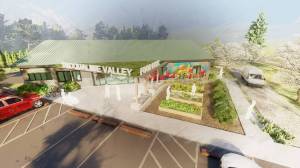
Some 30 years later the new Snoqualmie Community Center is
expected to fulfill the same purpose, and then some. Planned for
construction on Snoqualmie Ridge, the new building will serve not just as a center
for the community, but will also help unify the residents of “old” and
“new” Snoqualmie.
City Park Superintendent Jeff Mumma said as much in an
October 1998 interview with the Valley Record.
“We’re looking at this building as a way to unite Snoqualmie Ridge,
historic Snoqualmie and the Upper Snoqualmie Valley,” he
commented. “It’s definitely been a long goal
with the city to bring both groups of people together and create one
community, rather than one up there and one down here.”
However, the subject of the community center and its proposed
construction schedule now threatens to drive a wedge between “old”
and “new.” The city has a plan, an agreement and financial commitments
from Weyerhaeuser Real Estate Corporation (WRECO) to start construction
in 2001 with an estimated completion date in 2004. For some Ridge
residents that’s not soon enough and they’ve started a campaign to get the
project started now.
For the homeowners on the Ridge, it comes down to their perception
of broken promises and declining property values. On the opposite side
of the fence are other Valley residents who have indicated the people on
the Ridge should raise their own money if they want an early start to
the project.
The city staff of Snoqualmie, which has signed agreements
with WRECO, worked community center funding into its budget and has
facilitated the planning and design process and public meetings, is caught in
the middle.
The Controversy
The issue first broke at the Dec. 13 meeting of the Snoqualmie
City Council. During the course of the session Ridge resident John
Jamieson presented the results of an informal survey of 100 neighbors which
he’d performed in late November. In their response, 83 households said
construction of the community center should start now.
Chief among their concerns, according to Jamieson, were the lack
of ball fields on the Ridge and a decline of property values due to the
absence of “amenities” they say they
were promised by WRECO.
“When we purchased our homes, certain amenities were promised,”
he wrote. “This included items like tennis courts, basketball courts,
soccer fields, baseball fields, parks, walking trails and the community center.
None of us expected to wait over six years for these amenities.
“We are well aware we won’t have baseball fields in our
Snoqualmie Ridge neighborhood, and we feel these amenities are slipping away
very fast! When we lost the baseball fields our property values declined; if
we wait years to build the community center, our property values will
decline even further.”
Jamieson stated the city’s plans for the community center had two
major flaws: one was the planned completion date of 2004, while the other
was a reliance on fund-raising efforts to bring in the bulk of the money for
construction. Therefore, he offered a proposal to take roughly $2.8 million
_ incorporating a portion of the $2.5 million in mitigation funds
allocated by the city to develop the ball field complex at the former Candy
Cane Tree Farm and $750,000 allocated by WRECO for the community center
_ and start construction now.
In support of his proposal, Jamieson noted the general consensus
among Ridge residents was that holding a fund raiser for the community
center would be “very difficult.”
“Most people `laughed’ when I told them we needed donations to build the
community center on the Ridge,” he wrote. “One person said, `let the rich
folks up there pay for their own community center.'”
“We would still need a fund raiser to complete the community center
and to build the baseball complex,” he added. “This plan would
ensure completion of the community center at the earliest possible date.”
In response, Council Member Cathy Reed strongly
reminded Jamieson that the community center had many proponents, but the city
had to take into account other funding requirements, such as staffing and
operating costs.
“Who’s going to pay to maintain it?” she queried. “Who’s going to
pay for the staff, for the equipment? I’ve been the strongest proponent of
the community center, but I’m not going to have it shoved down my throat.
“Look at the hospital; it’s failed twice because there were not
enough people up here to keep it open.”
“I didn’t say it should be done tomorrow,” Jamieson responded, “but
it will take three years to get the plans, get it started and get it finished.”
“We want this thing as soon as possible,” answered Reed.
“Nobody wants it more than me.”
At that point Councilor Colleen Johnson expressed her concern
over the “us versus them” issue that
seemed to be sprouting again.
“This upsets me no end,” she stated, adding an apology for the
comments by some citizens of Snoqualmie and North Bend. “I don’t want to
see us start fighting.”
“Nor do we,” Jamieson replied.
While the issue could conceivably drive a spike between the “old”
and “new” Snoqualmie or pit longtime Valley residents against the
newer families who are moving into the homes on the Ridge, the key
remains this: the planning and development of the community center has
involved two years’ time, multiple public meetings and several rounds of
negotiation between Snoqualmie and WRECO.
The city’s guidance and time and finance checkpoints for the
Ridge buildout and community center are contained in several planning and
legal documents dating back five or more years.
The Proposal
In August 1995 the city’s Department of Community Development
released the Final Supplemental Environmental Impact Statement
(SEIS) for the Snoqualmie Ridge Mixed Use Final Plan. The document
specified that 54 acres of the 1,343-acre total project would be dedicated to
community parks, with another 308 acres maintained as natural open space.
Notably, the report incorporated a neighborhood center conceptual
plan depicting an extensive complex which included a community center,
“neighborhood green” community area transitioning into a “Meadow
Park” and wetland interpretive area, an elementary school, a commercial
center and sports facilities. The proposed list of sports-related facilities
included one baseball field; two youth baseball/softball fields; two soccer fields;
three tennis courts; two basketball courts; two volleyball courts; one youth
football field; one track; one gymnasium; and one community center.
The document noted the size of the community center would be
determined during the facility planning stage. It added the actual facilities
to be provided would be determined during the platting stage, and could
vary slightly from the list.
Through the planning process _ encompassing several reports
and studies _ the concept of the community center continued to be
refined. The Sept. 15, 1995, city-approved Mixed Use Final Plan for
Snoqualmie Ridge listed “1 community center”
as part of the proposed facilities on the Ridge. It recommended
development of the community center in phases, with completion of the initial
phase coinciding with completion of the 800th residential unit. Next,
during consideration of the Phase III Municipal Services and Facility Plan of
O