
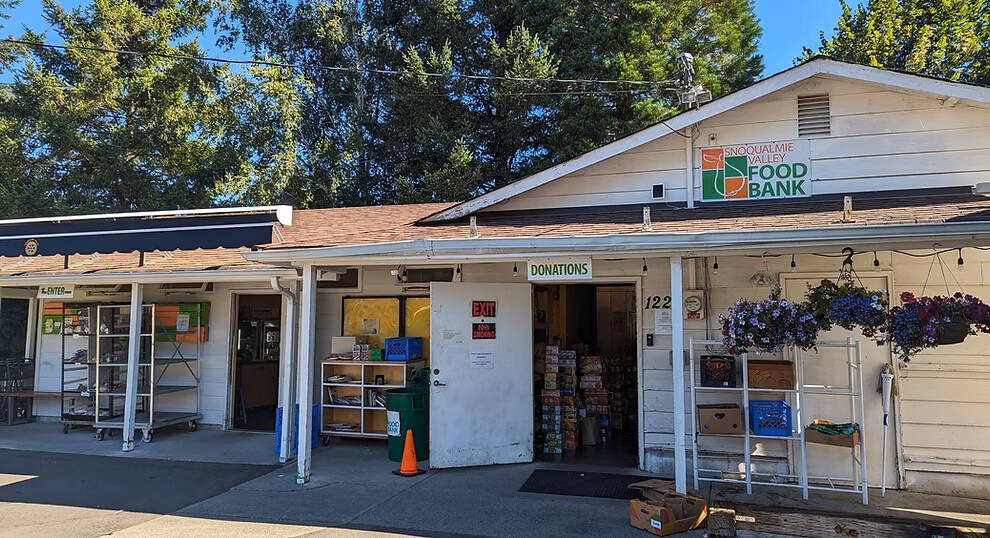
The access to food supplies is shrinking as the number of food bank clients is growing, according to news from the Snoqualmie Valley Food Bank.
In a July 28 news release, Snoqualmie Valley Food Bank (SVFB) said key federal food programs have been “slashed.” The North Bend-based nonprofit is calling on the community to donate and help wherever people can.
“Since March, we’ve seen a dramatic loss of food support due to federal program cuts,” said Executive Director Alison Roberts in the release. “This comes on top of reductions in food donations from longtime partners, and the impact on our shelves — and our neighbors — is overwhelming.”
There are two main reasons for the reduction in food supplies coming into SVFB. First, The Emergency Food Assistance Program (TEFAP), a federal program that had been providing thousands of pounds of food to SVFB each month, was cut in half earlier this year.
Second, Northwest Harvest, a large supplier for food banks across the state, has reduced its capacity and is focusing on areas with higher populations and lower median incomes. This has cut off SVFB’s supply of dry goods and other staples.
Federal cuts have also impacted the number of clients coming to the food bank, which was already up last year due to economic impact. The federal government is working to cut spending on the Supplemental Nutrition Assistance Program (SNAP), as well as tighten the requirements for users.
According to estimates from the office of Washington Gov. Bob Ferguson, residents who receive SNAP benefits could lose an average of 10% to 15% of their federal food assistance.
To cope with the cuts, SVFB has increased its budget for food spending — but according to the release, it’s not enough.
SVFB says the community can help by hosting a food drive — which SVFB is hoping to double the number of this year — donating funds or donating food. The current top food items needed include canned tuna, boxed mac and cheese, powdered baby formula and hearty canned soups.
“The Bottom Line: Without a rapid influx of food and financial support, the Snoqualmie Valley Food Bank could run out of vital supplies — leaving families without a safety net,” the release said.
For more information and to get involved, visit snoqualmievalleyfoodbank.org.

