Turn old celluloid into a family tale
Published 3:24 pm Thursday, October 2, 2008
You watch as the woman on the television screen laughs and cries.
She tells about how she met her first love, who was later torn from her arms
way too early. Soon you find yourself in tears, as the woman explains to an
inanimate metal machine how she raised her three children on nothing
more than love.
Then you discover that the woman was the grandmother you never met.
Each year, hundreds of people try to preserve their family’s past
through video-taped interviews, complete with music, pictures and memorabilia.
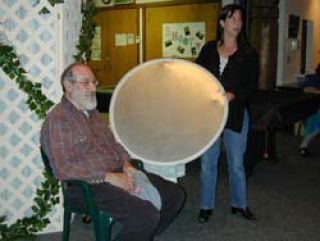
Last week Holly Taylor – who produced the documentary “Life
Along the Tracks” – held a video recording tips workshop at the Mount Si
Senior Center. The purpose of the seminar was to encourage younger people
to capture their family’s life story before it’s too late.
“I wish I’d done [an interview] with my own grandparents and I
hope some of you will do it,” she said.
One of the first things to do before the interview, Taylor said, is
to make sure that the person in front of the camera is casual and at ease.
She suggested that the interviewer keep the tone light and casual.
“People freeze, even if they’re talkers; they’ll freeze like deer in a
headlight,” she said. “So keep it
conversational, or say the camera is not even on.”
Another aspect of making sure the product will be usable is to be
prepared with the proper equipment — tripod, camera, microphone and headphone.
“The first rule is a tripod because people get nauseous after
watching two minutes of shaky video,” Taylor said. “Or at least put the camera on
a chair to keep it still.”
Also, don’t rely on the camera’s built-in microphone to record
the person’s voice, she said. If the cameraperson is chewing gum or
accidentally knocks the camera, those sounds would be picked up by
the microphone, not the person speaking. Taylor also suggests turning off
all appliances in the area that can contribute to background hums and
sounds, such as refrigerators and fans.
But there are some background noises that are acceptable and
useful to record.
“If grandma is talking about the cat who bothered her during the night,
you might want to get the sound of the cat scratching on the door,” Taylor said.
Another valuable tool that can be used to enhance the
interviewee’s story is “B Roll,” which are scenes
of anything but the person.
“Visuals are very important. So, if your grandparents talk about
something [for example, going to the beach], show some of the video
[of waves] after they tell the story,” Taylor said.
When editing the video, Taylor said to use about three to eight
seconds of B Roll per segment. But when actually taping the scenic video,
shoot a minimum of 10 seconds. That way you have a better chance of getting
a clear shot without the shaking that usually occurs at the beginning
and end of each taping.
When filming the interview, Taylor said to use a variety of shots
such as close ups on the face, head and shoulders shots, and full-length
angles to offer variety for the viewer.
Generally, it takes about two hours to interview one person and
another eight to 10 hours to transcribe the material. The editing process will
vary depending on how elaborate the end product will be.
Don’t fear, because there is help for the beginning editor. Taylor
suggests going to 911 Media Arts Center in Seattle because they have a
variety of classes, editing stations and rental equipment suitable for the novice
director.
Prices for camera rentals start at $80 a day, or a tripod,
microphone, camera and monitor can be rented for $115 a day. The editing rooms,
which are all digital, start at $15 an hour.
“Someone can come here with absolutely no experience and
edge their way through the system,” said Brad Thompson, administrative
director for the center.
Classes on how to use the camera, video production, and editing
range from $150 to $300.
911 Media Arts Center can be reached at (206) 682-6552 or
visit their Web site at www.911media.org.