
When the pandemic struck two years ago, city officials in North Bend and Snoqualmie prepared for the worst.
They, like most cities, were expecting the health crisis to bring budgetary devastation. The cities promptly made cuts and began pulling back on plans for new projects.
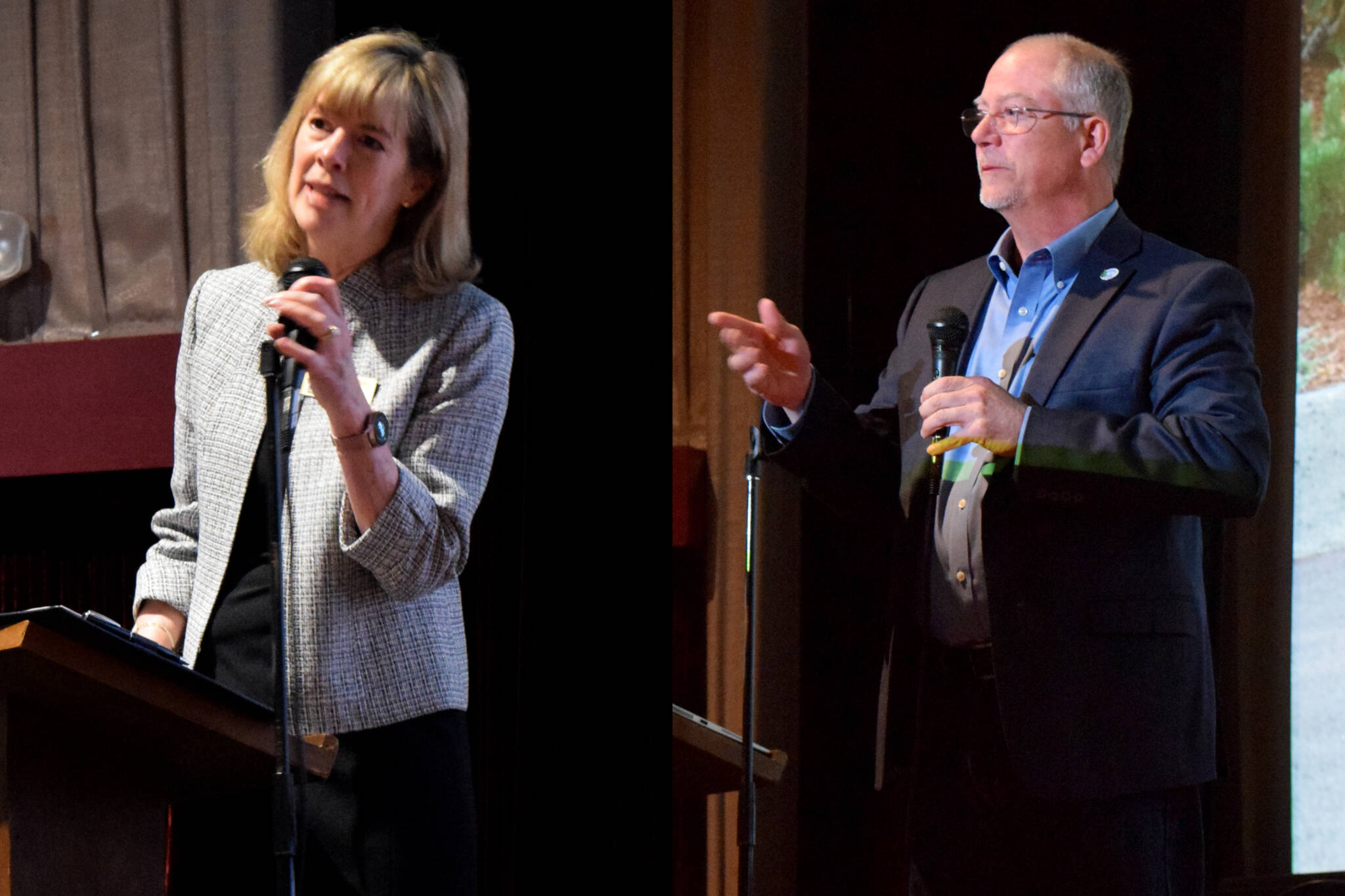
On April 27, as Snoqualmie Mayor Katherine Ross and North Bend Mayor Rob McFarland took the stage at the North Bend Theater to deliver their annual State of the City addresses, they painted a much rosier picture of the future in the upper Snoqualmie Valley.
“We’ve coined 2022 a big bounce back year,” Ross said, opening her nearly 20-minute presentation in front of members of the SnoValley Chamber.
“If you attended [the State of the City] last year, you may remember a pessimistic picture about our financial future,” she said. “While the pandemic has presented new challenges for us, we now have a better grasp of our long-term financial picture and are optimistic about our path forward.”
Ross’ presentation comes nearly four months after she first took office, replacing longtime Mayor Matt Larson beginning in 2022. She joins a host of new leaders at Snoqualmie City Hall, including four new councilmembers and a new city administrator
“There’s definitely new energy at City Hall,” she said. “And we’ve hit the ground running.”
Part of that bounce back came with 2021 being the biggest sales tax revenue year in city history, at least partially due to an increase in online shopping prompted by the pandemic.
The city has also benefited from federal funding from the American Rescue Plan Act (ARPA) to make up for lost revenue, as it continues to find ways to prevent budgetary deficits in coming years.
Over half of the city’s expenses go toward employee salaries and benefits, which Ross said rise 3-5% each year due to inflation. At the same time, state law limits property tax increases no more than 1% annually, creating a projected budget deficit by 2025.
To prevent this deficit, she said the city is looking at other ways to maximize revenue, including economic development and increasing sales tax generated through tourism.
Aside from budget recovery, Ross also touted major victories for the city in this year’s legislative session.
To applause, Ross said that State Route 18 has finally received the last $640 million in construction needed to finish its four-lane expansion. She also said construction at the SR 18/I-90 interchange is expected to begin this summer.
The state also provided funds to repave the Snoqualmie Parkway and for a new mental health coordinator position inside the city’s police department.
In terms of city projects, Ross mentioned the $17 million improvement to downtown infrastructure, sidewalk repairs and the all-inclusive playground at Centennial Park, which is expected to be finished this summer.
Ross ended her speech by recognizing the return of many in-person city events and work the city council will take on, including its biennial budget update and next comprehensive plan as well as identifying its council priorities.
“We know that we have a lot of work to do,” she said. “Our community is roaring back to life.”
Rob McFarland
In a more laid back speech, McFarland, who has been North Bend’s mayor since Jan. 2020, talked about what it has been like starting his time as mayor during the pandemic.
“I feel like the way Mayor Ross was introduced,” he said. “Like I’m just coming into the office — I do think it’s not possible, it’s been three years.”
North Bend, like Snoqualmie, benefited from an increase in sales tax revenue last year, with sales tax revenue increasing by 30%.
“I actually thought Amazon opened a distribution center in my neighborhood,” he said.
McFarland said although the city halted development when the pandemic broke out, it appears development and subsequent revenue is soaring again.
Snoqualmie had been home to most of the Valley’s growth over the past decade, but North Bend now has the fastest growth rate on the Eastside, McFarland said.
Most of that growth has been met with single-family housing in the last few years. McFarland said the city has very few single-family lots left in its pipeline as it works to add more multi-family housing and apartment complexes.
McFarland particularly highlighted the need for affordable housing so that teachers and first responders can live in the communities they work in.
“We continue to work on [affordability] and we continue to lose ground,” he said of the city’s efforts. “We’re not giving up.”
The city currently has two major apartment complexes just east of downtown in the works. The River Run complex, a 128-unit property, began clearing and grading in January, and the 212-unit Dahlgren property is expected to start vertical construction “in no time,” McFarland said.
McFarland also highlighted city infrastructure projects, including the city’s efforts to fill gaps in sidewalks and trails throughout the city and improve walkability.
Massive improvements totaling $35 million are also expected to finish next year at the city’s wastewater treatment plant. That plant was near failing and posing a potential for pollution when improvements began in 2016. When finished, it’s expected to support North Bend’s growth for the next 20 years.
“City Hall is open, people are coming to it, it’s a great feeling,” McFarland said.

