Local riding club in danger of losing arena
Published 2:00 pm Thursday, October 2, 2008
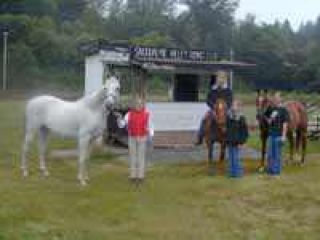
NORTH BEND – Starting with its inception in 1942, The Snoqualmie Valley Riding Club was the center of activity for many equestrians in the area. But in recent years, membership has declined to a point where the club might not be able to support its arena.
The arena is located near Harmon Heights on the south side of Interstate 90 in North Bend and was built in the late 1950s, along with an on-site clubhouse. Both are owned by the club, which is a non-profit organization.
“It’s a very big part of [Valley] history, far more than people realize,O said Bonnie Hawk, whose husband was one of the club’s charter members. “It was an integral part of the community in its activities for many years. I’d certainly hate to see it go by the wayside because it’s certainly an asset to the community, if they’ll just use it. All those years and the work and the sweat and the tears that all those people put into it, that committed money and time and energy, it would be a shame.”
There are currently five members in the riding club, which in its heyday in the early 1970s boasted around 200. According to former avid-rider Ann Doerfler, the club needs about 30 members to survive. In order to pay increasingly high King County taxes for, and maintain the club’s arena and clubhouse, the organization needs to hold horse shows. In the past, the club sponsored from one to three shows per year. Show registration fees are what always kept the arena in the club’s ownership. We think keeping it as a horse facility is, of course, the first choice for all the people that have used the arena throughout the years historically. We’d like to see it stay a horse facility.
It takes two dozen members to run a show, which includes preparing the arena, ordering trophies, judging and other tasks – but weak membership equals lack of money. Membership dues are not enough to support the arena, since they are $20 per family, a fee kept low so people would be able to afford to join.
It’s been three years since the club held a show and money in the bank has dwindled, so something needs to be done, Doerfler said. If new members don’t join, the club will be faced with finding another use for the property, possibly posting it for sale. Another option to help pay fees would be for local 4-H or other clubs to support the arena, but usually, those clubs already pay dues somewhere else.
Although she doesn’t own a horse anymore, Doerfler is still active in the club, and is a 4-H leader. She feels the tradition should continue because the club has always had a strong presence in the Valley.
“I still believe in the idea of the club. It needs to be passed on to a new group of enthusiastic horse people,” she said. “[En-rollment] ebbs and flows and we’re at a real down time right now and need new members.”
Doerfler, who has belonged to the club for 20 years, explained that the riding club filled a gap in an area where young people don’t have as many activities available to them as a big city.
“It offers a very healthy family alternative for people that have horses and want to socialize around an equestrian setting,” she said. “I think the more opportunity that we have for a variety of activities for families in the Valley, the healthier the Valley is. And this is one opportunity for activity for families, so if we can support it, that would be a good thing.”
One element Doerfler put forth as a reason for low membership is the lack of riders in King County. Where several households in decades past owned a horse or two, now not as many make the animals a part of their lives.
Historically, clubs from all over the state would participate in shows and ride in the arena, including the Washington State Horseman, an organization separated into several regions. A number of the Snoqualmie club’s riders were state finalists, some became state champions.
“At one time, because of the quality of the ground in that arena, [the Snoqualmie Valley Riding Club] held 12 of the 17 state records that were set on that field in the 1970s,” Hawk said. The club also hosted a variety of community events at the arena, including BMX races, baseball games, a firemen’s tug of war and sponsored other clubs, such as the Washington Women’s’ Barrel Racing Association. The arena also has lights for night riding, and the clubhouse is used for potluck dinners and other events. The soil under the arena drains well and thus, the arena was once said to be one of the best arenas in the state, according to Hawk.
The riding club was also known for its sponsorship of the annual “Jamboree” in North Bend, which was the precursor to the Alpine Days festival. It included everything today’s festivities have – a grand parade with floats and bands, and concessions and games. Later, the chamber of commerce took over parade sponsorship.
“The Snoqualmie Valley Riding Club was kind of a parent club to others in Issaquah and Fall City, Cherry Valley and Roslyn,” Hawk said. “I can remember at one time, because we were in the horse business, we belonged to nine different clubs. There were a lot of really good people in the Valley that participated.” Eventually, the club got so big that it split into different sections, one of which resulted in Raging River Riders in Fall City.
“The point of it is, is that piece of ground is the kind of ground that records can be set on. It’s in a location that is easily reached, and if the families would participate with the children, this is an activity that would be an absolute jewel to the community, a real asset, something that they should not lose,” Hawk said.
For more information or to join the Snoqualmie Valley Riding Club, call Deborah Marion at (425)888-6908 – and you don’t have to own a horse to join. All horse-crazy people are welcome to come and learn and enjoy horses.