Flooding sets records in some parts of the Snoqualmie Valley
Published 1:35 pm Friday, December 19, 2025
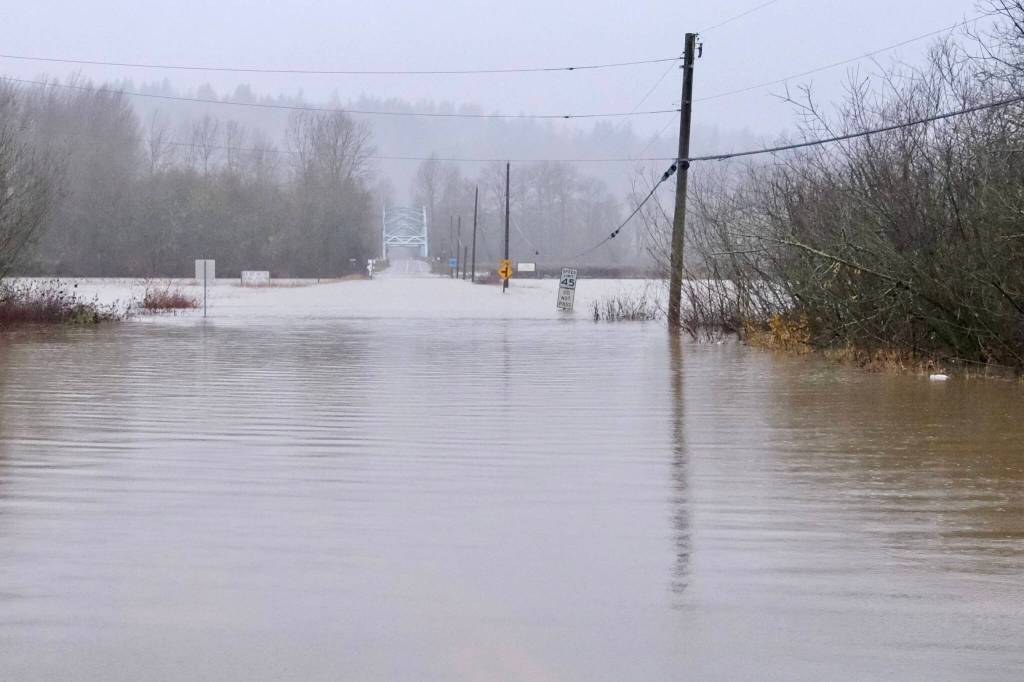

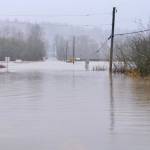
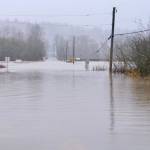

The Snoqualmie Valley has experienced a record-breaking flood for the first time since 2009 — and in some places, residents say this flood was worse.
At 4 a.m. Dec. 11, the Snoqualmie River at Carnation hit a max height of 60.76 feet with a flow rate of nearly 90,000 cubic feet per second (cfs). In January 2009, that spot of the river reached 62.21 feet, but the flow rate was lower at 82,900 cfs.
The difficult part of measuring a flood is that the impact can vary greatly at each point along the river. While this flood was, by all accounts, historic, Duvall farmers say it was also record-breaking.
Kerrie Roetcisoender, co-owner of Muddy Boots Pumpkins, said before now, the worst flood in Duvall was November 1990. But in Carnation, the worst flood is regarded as January 2009.
Roetcisoender attributes this discrepancy to the “king tides” in Everett: each winter, there is a point when the sun, moon and Earth are aligned to create the highest tides of the season. When king tides occur, it pushes water upstream, essentially backing up the Snoqualmie River, which then floods into Duvall.
This year, king tides aligned with the atmospheric river weather system, and Duvall had an abundance of water coming from several directions.
Roetcisoender owns Muddy Boots with her husband, Jason Roetcisoender, who not only grew up on the property, but is a fourth generation farmer. In all of the decades the farm has been in the family, flooding has never been quite this bad, they said.
In the January 2009 flood, water barely got up to the concrete approaching the Roetcisoender’s raised house. This month, the water covered their first front step.
“It was probably a foot from going in and hitting my sunken living rooms,” Kerrie said. “For us in Duvall, it was historic. It was the biggest flood we had seen.”
Other farmers seem to be in agreement. Siri Erickson-Brown and Jason Salvo own Local Roots Farm, which is located right off of NE 124th Street outside Duvall and has a Floodzilla gauge. Throughout the flood, they’ve been sending out updates on social media and through their email newsletter.
A newsletter Dec. 15 detailed their experience last week and how it compared to the other flood events they’ve seen in their 15 years of Valley farming.
“This flood was a profoundly different experience than anything we have seen before. … As the rain began in the mountains and the forecast gelled, we were busy preparing for a flood that would rival the highest we had ever seen. But as the water started to arrive at our farm, it quickly became clear it would be a lot higher than that,” the newsletter stated.
“As we’ve checked in with fellow valley bottom-dwellers in the last couple days, it’s become clear that this was, in fact, a record breaking flood. By all accounts, water has never reached such levels in the area around Duvall since records started being kept in the 1930s.”
Another multi-generation farming family in Duvall has been “forced” into retirement by the flood and has set up a GoFundMe to help recover some lost funds.
The owners of Cha New Life Garden, Chue and Jue Chasengnou, have farmed in the area for more than 20 years, surviving the high floods of 2006 and 2009, according to the story written by their son on the fundraising page.
“The atmospheric storms of December 2025 have proven to be the most devastating yet, dealing a catastrophic blow that Chue and Jue cannot recover from,” Christopher Chasengnou wrote.
He went on to say that the family has experienced a “total loss” of personal property, losing everything they owned to the flood.
“Most devastatingly,” he said, they lost the seeds and flower bulbs that were “the very foundation” of the business. The flood also drowned their entire flock of free-range chickens and swept away the ducks, he wrote.
“This is devastating for our mother, Jue,” he said. “These animals were not just livestock. They provided eggs for the family and, more importantly, were Jue’s daily companions. Losing them has silenced the farm and broken her heart.”
Now, the longtime farmers have decided to retire early.
“While retirement was always part of their eventual plan, they never anticipated it ending like this.”
For information on how to help farmers and other residents recover from flooding, read “How to help with Snoqualmie Valley flood recovery” in print or at valleyrecord.com.