
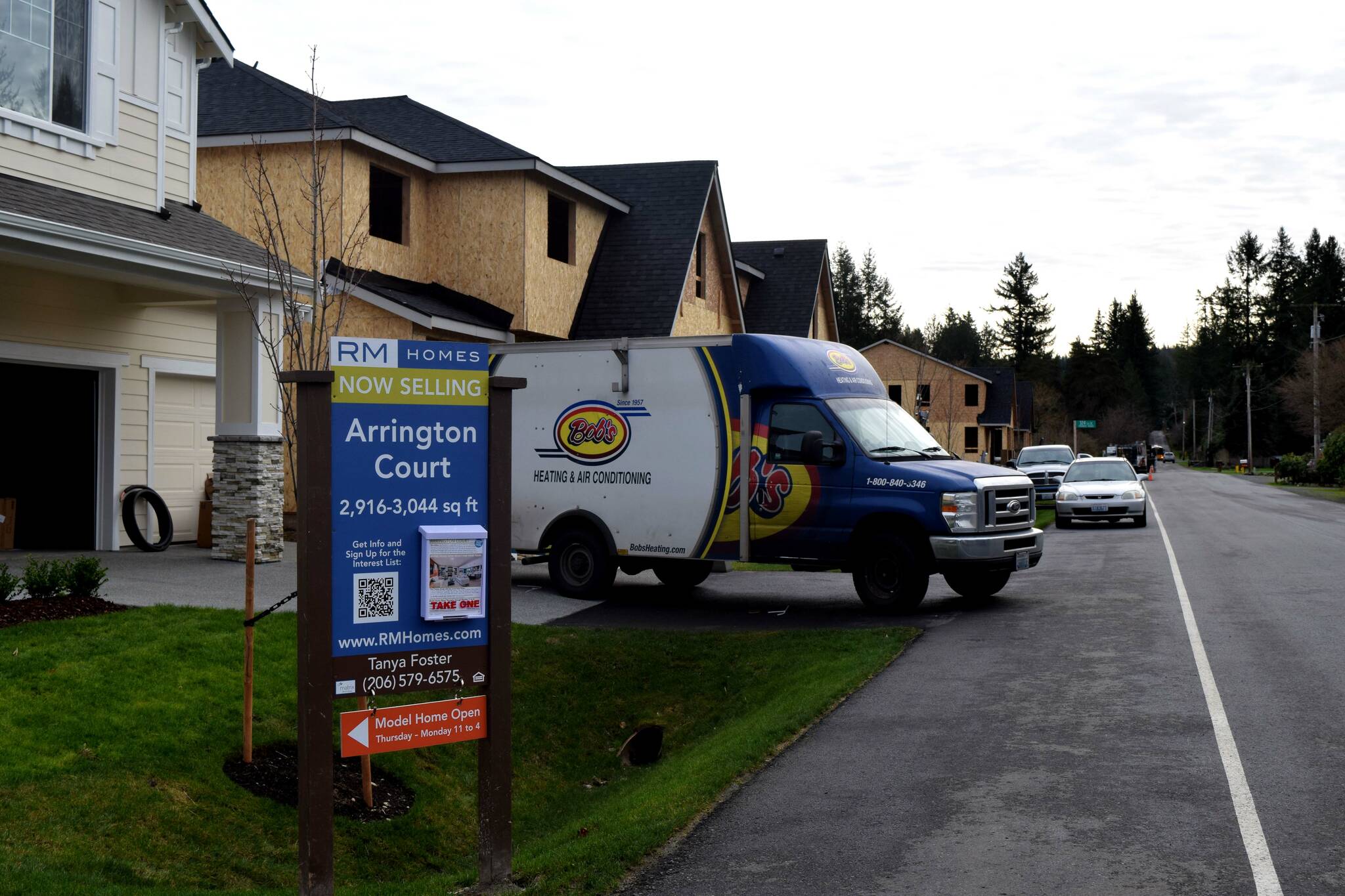
After years of Fall City residents pushing back against proposed housing projects, a developer has offered $1.45 million to stop the fight.
Local nonprofit Fall City Sustainable Growth (FCSG) has been fighting against the construction of several new housing subdivisions in Fall City for more than two years. Specifically, residents are worried about the effects development could have on their groundwater supply, the salmon population and the area’s rural character.
The plans, proposed by Bellevue-based Taylor Development, would add more than 100 homes across six different sites in the heart of Fall City.
Taylor Development already completed one subdivision a couple of years ago that added 17 homes to Fall City. The other six subdivisions remain in permitting as the conflict with FCSG has continued to push back the timeline. If Taylor Development follows through, it would add a total of 121 homes and approximately 292 people to Fall City’s population, based on King County demographics information.
After several appeals in King County court, the unincorporated King County community of about 2,000 will have to decide between standing firm or taking the settlement funds.
“People are less interested in money than they are ensuring that the aquifer is not going to be negatively affected by 130 additional homes,” said FCSG President Mike Suelzle. “They’re interested in ensuring that the right science and the facts are complete before things move forward.”
In 2023, FCSG sued Taylor Development in King County Superior Court. The suit was an effort to overrule King County’s approval of three housing subdivision applications, arguing the applications did not align with the county’s Comprehensive Plan.
The Comprehensive Plan is a high-level document that regulates how unincorporated areas of the county will grow, how government services will be provided, and how the environment will be protected from that growth.
Fall City is one of only three places in King County that are designated as a “rural town.” For years, residents have said this should impact how development is handled there. But the reality is that Taylor’s developments are compliant with zoning laws, which ultimately determine if development moves forward.
FCSG recently sent out a community survey to gauge how residents felt about the development. Out of 427 responses to the multiple-choice survey, 75% of respondents believe Fall City should “reject negotiations and not engage in dialogue with the developer.” And 80% of respondents said it was not appropriate for the developer to “offer community donations or projects in exchange for reduced opposition or legal appeals.”
The survey also asked what the community should do with the $1.45 million from Taylor Development, in the event FCSG decides to accept it. The top choice from respondents was groundwater and drinking water protection, loosely followed by preserving rural character.
For the December issue of the community’s newsletter, “Fall City Neighbors,” Suelzle provided a brief history of the situation and recent updates. He wrote that many of the options for appeals have been exhausted, and FCSG is now shifting its focus to “water protection, environmental monitoring and public transparency.”
He added that FCSG continues to be in discussions with Taylor Development.
“I have had multiple meetings with them, and they legitimately want to try to work with us,” Suelzle said. “But the challenge right now is, I feel the current settlement agreement is so one-sided. There’s nothing in it for us.”
There is now a petition circulating, started by the Fall City Community Association (FCCA). The petition asks that construction be paused on the developments — which have been making headway for about a year — until a groundwater and environmental impact analysis is complete.
“This pause is not an attempt to stop development,” the petition says. “It is a safeguard to ensure that King County and the applicant honor the Hearing Examiner’s decision that groundwater and river-impact analysis must be completed before any irreversible harm occurs to Fall City’s drinking water and the Snoqualmie River.
“The cumulative analysis is already underway and expected to conclude within a reasonable and limited timeframe — however the plats involved in the analysis are still being permitted and allowed to proceed to clearing and grading.”
This analysis was ordered by the King County Hearing Examiner in December 2024 after FCSG appealed the SEPA decision on one of the subdivisions called Stevens 24. SEPA stands for State Environmental Policy Act, and developers have to complete a SEPA checklist to show a proposal won’t have an adverse environmental impact.
Suelzle said he, too, would like to see all development paused — whether already permitted or not — until they get the analysis back. That analysis, he said, might also determine whether FCSG accepts Taylor Development’s settlement offer.
“It would be premature to take an offer,” he said. “We just haven’t seen the data yet from [the analysis], and the data could drive our decision.”
For more history on the situation:
• Fall City aims to preserve ‘rural character’ amid unprecedented housing growth

