Deal pending on Falls Crossing
Published 2:20 pm Thursday, October 2, 2008
SNOQUALMIE — Saving Snoqualmie Falls from
development is now one giant step closer to reality.
Efforts to conserve a major portion of property slated for
the proposed Falls Crossing project are moving forward on a fast
track, thanks to a $13.3 million deal hammered out over the past
two months.
The controversial Falls Crossing development
application came before the City Council for review following a
September 2000 recommendation for approval by the Snoqualmie
Planning Commission. Concerns over protection of the historic
view from the Falls, wildlife habitat and community character were
the subject of hot debate, leading to an exhaustive review process.
The recommendation included 694 findings and 136
conditions crafted to mitigate adverse environmental and community
impacts, but the project continued to draw fire from the
community and several environmental groups.
Documents provided by Snoqualmie city staff have
identified a series of actions that would set aside about 80 percent of
the property, owned by Puget Western Inc. (PWI), and would
convert the land into permanent open space. The plan requires that
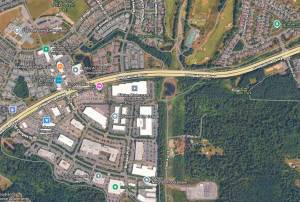
development be confined to the PWI property located south
of Snoqualmie Parkway. The land north of the Parkway will be
limited to passive recreation activities, such as hiking.
Originally planned for 370 dwelling units and 215,000 square feet of
business and commercial space, the agreement limits Falls
Crossing to an equivalent business area, but less than 100 dwelling
units to be contained on 11 acres.
The proposal was presented to the City Council at its Feb.
12 regular meeting for a first look at the details. Following a
closed executive session, which is standard practice in real estate
purchase matters, Mayor Fuzzy Fletcher went on the record to
discuss the deal.
“This is the best thing that could have happened _ I’m
ecstatic,” Fletcher said. “The city listened to the community
and heard the message loud and clear. We’re saving the Falls and all
the land around it. The city worked a deal that is a win-win for
everyone.”
The complex, multi-jurisdictional agreement was brokered
by the Cascade Land Conservancy, a Seattle based non-profit
organization dedicated to preserving sensitive lands in King, Pierce
and Snohomish counties.
Officially titled the Snoqualmie Preservation
Initiative, the agreement includes the protection of 2,800 acres
along the Raging River and the potential to preserve another 4,000
acres of Raging River property currently owned by the Fruit
Growers Association. Also included are 600 acres of Tokul Creek
watershed lands, tributaries and trail protection. The Cascade
Land Conservancy, along with the city and the Snoqualmie Tribe,
would act as an advisory body on future land stewardship issues.
The proposed initiative calls for City Council approval of
the purchase-and-sale agreement by March 15. Although the land
conservancy will not be funding the sale, signing of the document
will initiate the joint planning area (JPA) process, a cooperative
land-use agreement between the city, King County and
the Weyerhaeuser Real Estate Co. (WRECO).
According to the documents, the city will pay $1.65
million toward the purchase price. WRECO obligations include a
$3 million down payment in June 2001, $2 million in 2005,
another $2 million in 2007 and two additional $2 million payments at
an as yet unscheduled date. If WRECO opts out of the deal,
the agreement allows King County to assume the corporation’s
payment schedule in order to continue the preservation plan.
“We appreciate that people have worked very hard on
this,” said PWI President Bob Boyd. “We’re trying to work within
parameters that work for others, and we’ve had to be accountable
to our stockholders as well.”
Boyd added that PWI will make a charitable contribution
to the Cascade Land Conservancy as an entity, but he did not
disclose the amount of the gift.
In exchange for WRECO’s payment, amended
interlocal agreements will increase the density cap and allow the
corporation to add another 268 dwelling units to Phase I of
Snoqualmie Ridge. The plan calls for expansion of the existing urban
growth area (UGA) for Phase II of the Ridge, but according to city
officials, the annexation was contemplated in the county’s 1994
comprehensive plan. The agreement states that the additional units
to be constructed in the Phase I area will not squeeze existing
development and the increased housing will replace planned
business park and retail space.
“We’re taking a small amount of growth now, but by doing
so we’re preventing major growth and sprawl in the future,”
Fletcher said. “We had to jump in the car, get up front and steer like hell
to do that.”
For its payment, the city of Snoqualmie will own all of
the PWI property north of Snoqualmie Parkway,
together with the Snoqualmie River and Kimball Creek open spaces.
The city will also gain a 6-acre parcel of land on the north side
of Snoqualmie Parkway as a site for a new city hall and fire station.
“A future municipal building site is already figured into
the city’s capital improvement plan,” explained City
Administrator Gary Armstrong. “We would have ended up paying more for a
site than the $1.65 million city share of this initiative purchase
price. We get the municipal property we need, and we preserve the Falls.
It can’t get any better than that.”
Presenters of the initiative pointed out that the
agreement will also has a provision for 25 to 30 additional Habitat for
Humanity of East King County homes and makes additional
funding available for a pedestrian/equestrian bridge. But more
importantly, City Attorney Pat Anderson said, successful
acquisition of all the properties will connect the land from Tiger
Mountain State Park to Rattlesnake Ridge as one, unbroken parcel of
publicly owned land.
“This agreement has been a lot of hard work,” Anderson
said. “We’re very pleased to bring this forward with the ability to
save the Falls. It’s an important agreement that gives all the
parties what they need and value the most, but the biggest winner
is the public.”