Snoqualmie Valley Health staff talk importance of regular mammograms
Published 3:30 pm Thursday, October 23, 2025
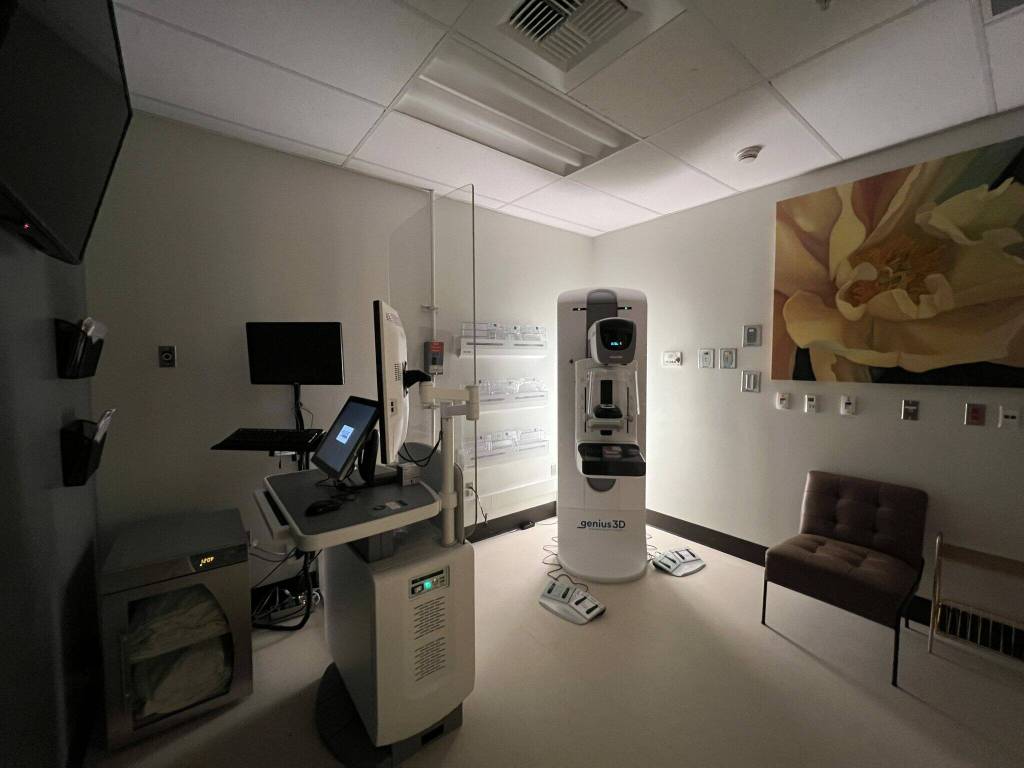
When Snoqualmie Valley Health (SVH) was ready to open its mammography suite in July, Dana Townzen volunteered as a “guinea pig” to test out the new screening technology.
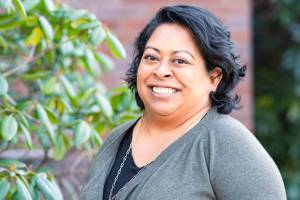
Townzen, an MRI technologist for Snoqualmie Valley Health (SVH), has always gotten regular mammograms but was a bit overdue this time after struggling to find an appointment time.
After years of negative tests, Townzen’s SVH screening showed she would need to come back for a follow-up, which then led to a biopsy. This month, Townzen will have a lesion removed so further pathology can be done on it.
“We’re hoping that we caught it early enough that everything is just precancerous, and we won’t need to go with further treatment,” she said.
Dr. Kara Carlson has been reading Townzen’s screenings for years as the medical director at RAYUS Radiology’s Issaquah Breast Center. She is now also the radiologist for Snoqualmie Valley Health’s mammography suite.
Carlson said there is a lot of confusion as to when someone should get a mammogram and whether annual tests are needed for those who don’t have a family history of breast cancer.
The truth, she said, is that only about 8-10% of breast cancers are linked to a family history, and early detection matters for everyone. Average-risk patients should start getting annual mammograms at age 40, she said.
“No two cancers look alike. No two cancers necessarily behave the same,” Dr. Carlson said. “There’s calcifications, there’s distortion, there’s new density — there’s so many different things that can present that an ultrasound or our other tools may not see. And so once again, we bring you back to the mammogram as one of the most effective screening tools we have.”
A 2024 study by the Radiological Society of North America showed that annual mammograms from ages 40-79 decreased breast cancer mortality rates by 42%.
“It’s so wonderful that the Snoqualmie community went together and said, ‘This is really important,’” Dr. Carlson said, adding that SVH has done more than 200 screenings since opening in July, 20% of which were first-time mammograms.
SVH’s mammogram suite includes state-of-the-art technology, Dr. Carlson said, which provides 3D mammograms instead of 2D. The 3D technology sweeps through the breast tissue while the breast is compressed, allowing for better detection of masses that may be hidden.
“You’re actually getting little slices, almost like a deck of cards, through the breast tissue,” Dr. Carlson said. “It decreases the recall rate and increases the cancer detection. Everyone wins.”
There is also now a state law requiring the hospital to tell patients what kind of breast density they have. There are four types, Dr. Carlson said: almost entirely fatty tissue, scattered density, heterogenously dense and extremely dense.
After getting a mammogram, patients will see their breast density in their report, which helps them, along with their doctors, make decisions about supplemental testing. High density can sometimes mask masses on a mammogram, as both a mass and dense breast tissue can appear white, Dr. Carlson said.
“It’s kind of like looking for a snowman in a snowstorm in regards to seeing that,” she said.
“The 3D allows us to sort of peel [back] that normal tissue to sort of identify things.”
It’s important for people to watch for any and all changes in their breasts and bring them up to their doctor, Dr. Carlson said, rather than shy away from the conversation.
“Denial is a powerful thing, and it’s amazing what people will not try to acknowledge,” she said. “But it’s really important, the sooner we find things, the easier it is to take care of.”
Townzen’s top advice is to not become lax with annual screenings.
“Regardless of whether you’re having your first mammogram and you’re just due, or whether you have always had negative [tests] and you’re not worried about delaying that mammogram this year, don’t wait,” she said. “You never know when that status could change.”