Reaching the summit
Published 2:39 pm Thursday, October 2, 2008
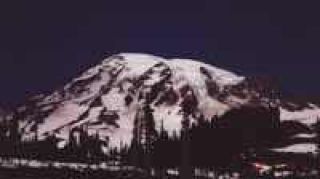
Growing up, Solveig Garhart listened to stories of how her father and grandfather climbed Mount Rainier.
In 1975, they climbed 14,410 feet to the summit and looked down upon the
rest of Washington.
“It was something I grew up with,” Solveig, who lives in North Bend,
said of the stories.
Now 17 and soon to be a senior at Mount Si High School, Solveig
said, “Last winter, I decided I wanted to climb it, too, this summer.” But
she didn’t want to go alone.
“My daughter wanted to do that with me,” Jim Garhart said.
Upon making their decision, Solveig learned of others who
wanted to climb Mount Rainier with her and her father.
Dan Corlett, 17, of Fall City, said scaling the rocks and snow of
Mount Rainier, “felt like a good challenge. I’ve always liked Mount Rainier.”
Dan, who will be a junior at Mount Si, has done rock climbing in the past.
Three other friends from across the state also decided they wanted to attempt
to reach the summit.
Leading the group were mountain-climbing veterans Annette Mockli
of Kirkland and her friend and fellow climber, Michael Jacobson.
Solveig’s father learned of Annette, who is a library technical assistant at
the Snoqualmie Public Library, from a mutual friend. In seven
attempts, Annette has reached the summit of Mount Rainier six times. For
her, climbing has been a lifelong passion.
“My dad always went hiking, so I did it as a child. Hiking escalated
into climbing,” she said.
Mount Rainier can present different obstacles to climbers,
depending on their experience. Different climbing routes of varying degrees of
difficulty exist for those wanting to reach the summit. Ice falls, rock falls
and traversing large ice flows and crevasses can be tricky, especially as
the summer sun starts to melt the snow.
The air can be freezing, and the winds can whip at more than 60
miles per hour. In the summer, it is common to ascend the final 4,000 feet from
the base camp to the summit at night. Nighttime limits the potential for
melting snow, but it can also limit visibility.
Three weeks before their actual attempt, Jim thought it would be
a good idea to climb to Camp Muir at night. Ten thousand, one hundred
feet up the side of Mount Rainier, the camp serves as a base camp for those
who want to climb to the summit.
“A lot of the climbing you do at night, and that’s what I wanted the
kids to experience,” Jim said.
But during the climb, the weather, which had been a gentle
snow, changed drastically. The winds started to howl and the climbers almost
lost their place on the mountain. Jim said the group, “got up to about 7,200
feet and a snowstorm started blowing.” Ice froze to Dan’s face, and Jim’s ear
and cheek were frostbitten. They struggled to search for “wands” that had
been planted in the ground by the Forest Service and for wands that Jim
had placed to show the group where it had been. They weren’t helped by the
bulk of their 70-pound backpacks and the skis they carried.
Annette, who has led other groups up Mount Rainier, said it’s because
the elements can change so rapidly that safety is so important when
climbing the mountain.
She said she tries to get climbers to realize that, “back to the car is
where you want to be at the end of the day.” In all, the group climbed to
Camp Muir five times with full backpacks while preparing to scale
Mount Rainier.
In order to be physically fit for the climb, the group trained every
other weekend starting in April and increased their workouts to every
weekend as July 14 approached. They climbed Mount Si and trekked up
to Alpental.
Then it was time for the real climb. On July 14, Solveig, her father,
Dan and their friends started at the base of Mount Rainier and climbed to
Camp Muir, which served as their base camp. The following day, July 15,
Annette and her co-leader, Michael Jacobson, hiked to Muir and met up with
the group.
The group set out at 11 p.m. that night to reach the summit.
Organized into two teams of four people, with each team linked together by a
50-meter rope, Annette and Michael led the other climbers to the top.
Annette said the climbers were aided by good weather.
“It was one of the best weather situations I’ve encountered on
the mountain,” she said. “It turned out
to be an outstanding climb.”
But making your way up 14,000 feet of snow and rock is a
daunting task, even if the weather is good. Annette said the group’s prior
training paid off.
“I felt overall they were prepared, as far as strength goes,” she said.
She taught the group to “power breath” and to take rest steps, where
climbers take one step, rest for a second, then take another step.
Dan said he expected the climb to be more physically challenging.
“It was easier than what I thought it would be.”
However, Annette said, climbing is more of a mental challenge than
a physical one, and Solveig said her attention was fixed on making it to
the top of the mountain, not on the scenic beauty that surrounded her.
“You’re so focused, you don’t realize what’s happening,” she
said. “You’re like, `Oh, we came up pretty far.’ Pretty soon you’re at the top.”
At 5:40 a.m. July 16, as the early-morning sun washed over the
mountain turning the snow a shade of pink, all eight members of the group
reached the summit of Mount Rainer. From their perch, they could see
the mountain’s volcanic crater, a half-mile wide and covered with snow.
They could see all the major peaks in the Pacific Northwest. They could
see down to Puget Sound.
“One cool thing when you reached the top was just how the mountain
laid out in front of you,” Dan said. “It
was huge.”
“I was really relaxed and calm. It didn’t really hit me,” Solveig said
of completing the ascent. She added what she had accomplished didn’t sink
in until hours later, when the group was preparing to leave Mount Rainer
National Park.
“It was like, `Wow, we were up there a couple hours ago.'”
Both Solveig and Dan said they are already planning on climbing
Mount Rainier again, possibly taking a more challenging route.
Annette said it’s the challenge that draws people to mountain climbing.
“I get to know myself through direct testing of the elements and
my skills,” she said. “I learn something about myself, and it makes
success, sweet.”