Legacy of the Y: Community center rising on Snoqualmie Ridge will be regional hub, planners say
Published 3:11 pm Tuesday, August 9, 2011
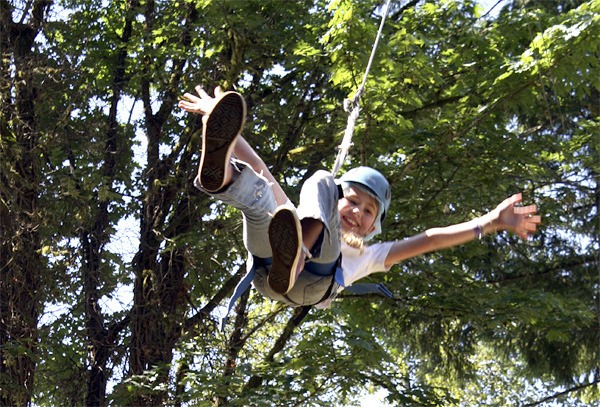
Decked out in identical yellow shirts reading “Happy Camper,” children squeal and squirm as they wait for the word to fall out.
When it comes, they heft their packs and trundle onto yellow buses, making room for the fun stuff at the big lawn at YMCA’s Camp Terry in Preston.
“It might look a little chaotic, but all the counselors have the kids in line,” said the Y’s camp director, Stacy Holdren. “They’re counting them as they get on the bus. It’s all about keeping kids safe.”
The day camp is a draw for hundreds of children from Renton to North Bend, a place for parents to find 12 weeks of summer distraction for children, and a way for the Y to pass on age-old camp traditions.
As a hub, Camp Terry mirrors the Y’s newest venture in the Snoqualmie Valley, the YMCA and community center now under construction atop Snoqualmie Ridge. The new Y, slated to open for charter members on January 1, is the Valley’s second YMCA, a lineal descendant of the original Snoqualmie Falls company town’s Community Hall.
The similarities to the Weyerhaeuser Y are there, but differences are clear, too. At 13,0000 square feet, Snoqualmie’s new community center is not a one-stop shop. Rather, the people behind the center envision it as a hub of community activities extending through and beyond the entire Valley.
“So many things we do take place outside the four walls,” said Snoqualmie YMCA Director Dave Mayer. “This is the perfect example.”
Visiting Camp Terry, Mayer pointed out how Camp Terry is a jump-off point for 300 children from every Eastside community, on their way to beaches, rivers and trails.
The same kind of experience is planned for Snoqualmie Ridge, where the Y is expected to be an organizing spot for existing day activities at Snoqualmie United Methodist Church and Opstad Elementary in North Bend, as well as new offerings.
“We’re going to be able to do a lot of great activities, but it’s also going to be bursting at the seams,” Mayer said. “The more we can get people outside the building, and still have mission-directed YMCA programs,” the better.
He runs down a vision that includes yoga classes at local lakes, morning running groups and mountain hikes.
“The YMCA is so much more than a building,” Mayer said.
Big plans
Snoqualmie Mayor Matt Larson believes the $4 million community center will help Snoqualmie handle a big wave of youth population. Snoqualmie has the highest percentage of youth, 35 percent, of any city in King County.
The path to a new center has led past three failed votes. The city of Snoqualmie floated bond measures in 2002, 2006 and 2008 to build a center and pool, each time failing to garner a supermajority vote. Larson said the council “unanimously respected the will of a clear majority of residents” in voting $950,000 of reserves to pay for construction.
Other funding sources included $2.2 million from Ridge builders Quadrant, Murray Franklyn and Pulte, a $341,000 donation from the Snoqualmie Tribe and a $100,000 annual commitment from the tribe’s mitigation and social services fund to pay for operations, $750,000 and a land donation from the Weyerhaeuser Real Estate Development Company, and $180,000 from Puget Western.
When the bonds failed, the city sought a partner to help carry some of the load and bring the project to life. The YMCA became the front runner, city officials say, because it was able to go beyond family programs. The organization was willing to act as an emergency shelter, allow non-members access to the building, and bring its own resources and history to the table.
When finished, the building will include a teen center, gymnasium, cardio/weight room, family changing rooms with showers, multipurpose rooms and a lobby with a fireplace. The building, which will front Ridge Street, has room for expansion, such as an aquatic center, skate park and events plaza.
While the new YMCA has met with some concerns regarding possible competition with adult fitness and children’s services on the Ridge, Mayer said he has met with a number of Ridge business owners, and intends to continue conversations aimed at minimizing friction.
“At a certain point, the Y (is) going to duplicate services,” he said. But Mayer emphasizes the Y’s differences as well as ways that the center and businesses can partner for local health.
“We’re going to concentrate on family, teen and youth programs,” he added. “But for us to remain sustainable, we have to have cardio machines and group exercise classes. The benefits of family membership come from that.”
The Y has a goal of 900 membership units—individual, couple and family memberships—for its first year. As of today, 76 units, representing about 300 people, have signed up. A drive for charter members continues. Y staff have set up a Facebook page and are attending Valley events such as the Festival at Mount Si and Sample Snoqualmie to get their word out. Every Wednesday, from 10 a.m. to 2 p.m., Y staffers set up a table near the construction site at Ridge Community Park to take memberships.
Deep history
When the big skate nights were hopping at the Snoqualmie Falls Community Hall, everybody had fun but Ward Keller.
The 12-year-old Ward had duty every Friday and Saturday at the turntable, spinning foxtrot, waltz and mambo records for the hardworking loggers and their wives.
“That was the biggest thing going on in the Valley,” Ward explained. But for him, it was the most boring of jobs. He’d much rather have been at the nearby cinema, catching a cowboy serial. The grown-ups and their boogies were of the least interest.
Ward, now 80, recalls helping his father, Harold, who as director of the community center worked long hours and six-day weeks, from 1942 to 1967, keeping the employees of the Weyerhaeuser mill and their families active and entertained.
The community hall was founded in 1918 by the local arm of the Loyal Legion of Loggers and Lumbermen, an association of workers and mill owners aimed at improving working conditions and the industry. The hall was meant to educate and uplift the workers’ community, but within a few years, locals were growing concerned by the consumption of alcohol on the property. In 1923, the Young Men’s Christian Association, today’s Y, was brought in to manage programs, and an expanded community hall was completed in 1924.
According to Snoqualmie historian Dave Battey’s 1990 account, “Structured programs for youth and family, unlike anything seen before (and perhaps since), kept the Community Hall calendar humming, year round. Exposure to the arts and other facets of culture were promoted. Religious and secular programs were accepted in the same environment. Training on how to be a useful citizen and how better to serve the world we live in were simply woven in to the ever-varying programs available.”
Battey served on Snoqualmie planning commission that filed the first, failed bond issue for the center. Almost everyone on that commission had been influenced positively by the original Snoqualmie Falls center, he said.
“We’re the ones that made certain that Quadrant/Weyerhaeuser set aside the land,” Battey said. “Every person at the planning commission had been touched by that Y.”
In his research prior to the vote, “I never interviewed an older person who didn’t bring up the YMCA,” Battey added. “That feeling was very, very strong.”
Starting in the 1920s, Community Hall Manager George Borden became an influential community leader. When Borden’s son died in 1942, he left the position, and Harold Keller was brought in from Tacoma. He, too made a deep impression.
Keller’s center was a hub for dozens of clubs and organizations. As company photographer, the elder Keller captured photos of them all—hunting, swimming, knitting, bridge-playing children of the Valley. For two decades, every youth that went through the school system, from North Bend to Carnation, learned to dance thanks to the elder Keller.
His civilizing approach took some getting used to in this tough, rural community where “fighting was part of the weekend,” Ward Keller remembered.
“My dad was very strict,” he said. “He set a very high level. If you walked in with alcohol on your breath, you were out of there.”
Comparing the YMCA of yesteryear with modern plans, Ward Keller is interested in seeing the new, finished product.
“These are the modern day facilities required to keep the attention of the kids,” he said. “They’re doing a lot of things for kids outside of the building.”
The new YMCA is powered by members. That wasn’t so in Harold’s day.
“He was a one-man show,” Ward said. “He was not responsible for raising money for the Y. Weyerhaeuser did that.”
Looking back, and ahead
Longtime resident Gloria McNeely remembers her own children using the center.
“If it becomes what it was,” she said, “if there are even half as many different opportunities in the building, it’ll be a gift to the Valley,” she said.
To Snoqualmie City Councilman Charles Peterson, the vanished center was a place where youths from different parts of the Valley could meet.
“It was a meaningful experience,” he said.
Whether the new YMCA makes as big an impact as the old one, Peterson said, depends on the director.
“A lot is going to depend on how good the director is at outreach, at sensing the type of activities, not just for youth but all ages, and being able to incorporate that into the building.”
Comparing himself to Keller, “It’s a lot to measure up to,” Mayer said. “They’re big shoes to fill.”
Meeting with Ward Keller, who is a YMCA board member, Mayer is impressed with Harold’s vast photographic record of all the dances, skate events and holiday parties that showed the role the old hall played.
“We’re doing as much as we can to reach out,” he said.
Spending time with charter members and focus groups will help carve the YMCA a niche, and tell Mayer and company what they need to do make this one a success.
“You only get one chance to open a branch,” Mayer said. “We need to concentrate on what our members are saying to us.”
• To learn more about the new Snoqualmie Community Center, visit ci.snoqualmie.wa.us or follow “Snoquamlie Valley YMCA/Community Center” on Facebook.